Mahindra, Tata Motors, Maruti Suzuki: Is The Auto Sector Entering A New Upcycle In 2026?
Alex Smith
3 hours ago
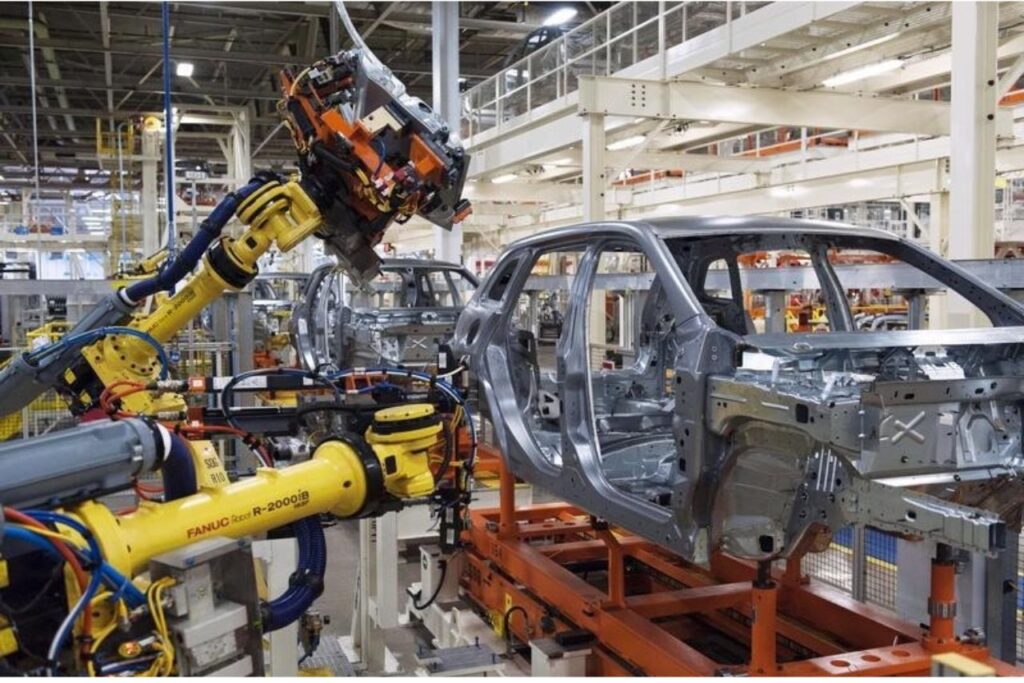
Synopsis: India’s auto sector shows early signs of a cyclical recovery in 2026, driven by GST-led affordability, strong SUV demand, improving entry-level volumes and aggressive capacity expansion. While demand momentum is broad-based, global risks, commodity pressures and sustainability of growth remain key watchpoints before confirming a full-fledged upcycle.
Mahindra, Maruti Suzuki and Tata Motors are all seeing improving demand trends, tighter supply and renewed buying interest after a muted phase for the auto sector. As volumes pick up and capacity expansion accelerates, the big question is whether this is just a short-term bounce or the start of a deeper revival. Could 2026 mark the beginning of a new auto upcycle?
Maruti Suzuki: Demand Momentum Returns, But Sustainability Questions Remain
A Sharp Demand Rebound Led by Policy Tailwinds
Management commentary from Maruti Suzuki suggests that the passenger vehicle cycle has seen a sharp revival following the recent GST reform, which reduced taxes by around 5 percent to 10 percent in one go. After a modest decline of 0.4 percent in the first half of FY26, the industry recorded a strong 20.5 percent growth in the third quarter, indicating a clear demand rebound.
Maruti Suzuki outperformed the industry during this period, with domestic sales volumes rising 22 percent in Q3 FY26 compared to a decline of 5.8 percent in the first half. The recovery has been largely driven by the small car segment, which benefited from being in the lower GST bracket, marking a meaningful turnaround for a segment that had been under pressure.
Management described demand as robust across segments, highlighting that the company had to operate on weekends to keep pace with orders. The company recorded its highest-ever quarterly retail sales of around 684,000 units and ended the quarter with very low network inventory of just 3 to 4 days alongside a healthy order book of roughly 175,000 vehicles.
Broad-Based Demand Signals Strengthen the Cycle Argument
Beyond headline volume growth, several underlying indicators point to improving demand quality. The company noted a positive shift in first-time buyers, with their share rising by around 6 percent to 7 percent, indicating strong entry-level demand and a clear upgrade trend from two-wheelers to small cars.
Demand is currently supply constrained rather than demand constrained, according to management, with the company indicating that wholesale numbers may not fully reflect the strength of underlying retail demand. Growth has been visible across segments, including SUVs, where the company is gaining market share, reinforcing the view of broad-based demand recovery rather than a narrow segment-led cycle.
Capacity Expansion Accelerates Amid Strong Order Momentum
Reflecting confidence in demand, Maruti Suzuki has accelerated capacity expansion plans. The second plant at Kharkhoda is scheduled to be operational by April 2026, while the fourth line at the Gujarat facility will also be commissioned soon after, with each adding about 250,000 units of annual capacity.
The company has also announced plans for another greenfield facility in Gujarat, underscoring a strong private capex cycle triggered by improving consumption. Management indicated that the company is currently operating at a capex run rate of around Rs. 12,000 crore for FY26 and expects to continue investing aggressively, with no funding constraints.
This expansion reflects management’s view that India’s growth story remains intact, with the country now the third-largest car market globally and new capacity being added almost every year by the company.
Margins Face Near-Term Pressures Despite Operating Leverage
While revenue and profits have improved, margins remain under pressure from several cost headwinds. Net sales reached a record Rs. 475 billion in Q3 FY26 compared to Rs. 368 billion a year earlier, while net profit stood at Rs. 38 billion versus Rs. 36.5 billion last year, impacted by a one-time provision of Rs. 5.9 billion related to new labour codes.
Sequentially, EBIT margins declined slightly to 8.1 percent from 8.4 percent due to multiple factors, including adverse commodity costs of about 60 basis points driven by platinum group metals, aluminium and copper, rare earth supply disruptions of around 20 basis points, and higher fixed cost incidence due to inventory depletion.
Additional pressures came from foreign exchange movements, price reductions in certain models and higher employee costs due to labour code provisions. These were partly offset by strong operating leverage of about 190 basis points, lower discounts and a favourable product mix contributing around 120 basis points.
Management also flagged potential upward pressure on steel prices, suggesting that the steel industry may be attempting to pass on higher costs despite government guidance.
Supply Chain Constraints and Commodity Risks Persist
Supply chain disruptions, particularly around rare earth magnets, have resulted in higher imports of sub-assemblies and incremental logistics costs. However, management expects this to be a temporary issue as domestic manufacturing capacity is likely to develop over time.
Commodity pressures across key inputs such as platinum, palladium, rhodium, aluminium and copper remain an area to watch, with some cost increases linked to broader global demand trends.
Exports, EV Push and Product Strategy Provide Structural Support
Exports continue to be a structural growth driver, with Maruti Suzuki holding nearly 46 percent share of India’s passenger vehicle exports in calendar year 2025. The company exported over 13,000 units of the e VITARA to 29 countries and is targeting over 100 markets. Export guidance for FY26 remains around 400,000 units.
On the electrification front, the company is expanding charging infrastructure, with about 2,000 exclusive charging points already operational and plans to enable over 100,000 charging points by 2030 in collaboration with partners.
Outlook: Strong Momentum, But Sustainability Under Review
Despite the strong rebound, management remains cautious about the sustainability of current demand levels, acknowledging that part of the surge could reflect preponed or postponed demand following the GST reform. The company plans to reassess sustainable growth levels in the coming months, with an earlier indication suggesting around 7 percent industry growth as a steady-state assumption.
In the near term, management expects demand to remain healthy with low discounts supporting profitability, while operating leverage continues to be a key margin driver. However, the durability of the cycle will depend on how demand evolves once the initial policy-led momentum stabilises.
Overall, Maruti Suzuki’s commentary points to a clear cyclical recovery supported by policy tailwinds, improving consumer sentiment and strong entry-level demand, but with management signalling that the real test will be whether growth sustains beyond the initial surge.
Tata Motors: India Recovery Strengthens, But Global Headwinds Keep the Cycle Uneven
A Mixed Quarter as Global Disruptions Mask Domestic Recovery
Tata Motors’ commentary presents a more complex picture of the cycle, where strong demand recovery in India is being offset by global disruptions, particularly at Jaguar Land Rover (JLR). Consolidated revenue for the quarter came in at around Rs. 70,000 crore, down 26 percent year-on-year, largely due to a cyber incident that resulted in nearly a month of production loss at JLR.
The group reported an EBIT margin of negative 4.7 percent, though this showed some sequential improvement across both JLR and the domestic business. Loss before tax before exceptional items stood at roughly Rs. 3,100 crore, while exceptional charges of about Rs. 1,600 crore included Rs. 800 crore linked to the cyber incident, Rs. 400 crore related to a one-time wage impact in India, and another Rs. 400 crore provision for stamp duty.
Free cash flow remained under pressure at negative Rs. 18,000 crore due to adverse working capital movement and weak operating profits at JLR, while net debt increased following a cumulative cash outflow of around Rs. 37,000 crore during the quarter.
JLR Faces External Pressures Despite Production Normalisation
Within the global luxury business, lower sales combined with supplier payments following the cyber disruption led to elevated cash burn. Year-to-date EBIT at JLR remained negative at around 2.9 percent with operating cash flow down by over GBP 3 billion. However, management indicated that production has now returned to full capacity, with expectations of recovery in the final quarter.
Regional trends highlighted uneven demand, with Europe and the UK seeing sequential improvement, while China and the U.S. continued to face pressure. In China, the luxury segment remains under strain due to local new energy vehicle competition and policy measures, including higher luxury car taxes. In the U.S., tariffs had been a key headwind weighing on performance. While tariff rates have since been reduced, this is a post-period development and its impact on demand and pricing dynamics will need to be watched over the coming quarters.
Despite these headwinds, management emphasised that the JLR brand remains resilient and that the business is entering a heavy product launch phase over the next two years, including Range Rover Electric and new Jaguar models, which should support long-term growth.
Domestic Business Shows Clear Signs of Demand Revival
In contrast to global challenges, the domestic passenger vehicle business has seen a strong rebound following GST rate cuts. After a weak first half marked by demand slowdown in the sub-four meter segment, market share has improved by about 1.5 percent since Q1 FY26.
The company reported record quarterly wholesale volumes of around 171,000 units, with retail sales crossing the 200,000 mark for the first time, representing growth of more than 22 percent year-on-year. January 2026 also saw record monthly sales of 71,000 units, up 47 percent year-on-year. Tata Motors rose to the number two position in the Indian market with a 13.8 percent market share, improving by 100 basis points sequentially.
Strong Product Cycle, Segment Momentum and EV Business Continues
Management highlighted strong demand across key models, with Nexon recording over 63,000 units in Q3 and Punch continuing to feature among the top-selling SUVs. The newly launched Sierra has seen exceptional response, with around 70,000 bookings on the first day, positioning it as a major growth driver in the coming quarters.
The introduction of petrol variants for Harrier and Safari is helping expand addressable demand, with bookings indicating that 30 percent to 35 percent of volumes could come from petrol variants. Segments such as subcompact and compact SUVs have shown growth significantly above the industry average following GST cuts, while the mid-size SUV segment has also benefited from new launches.
Electric vehicles remain a key growth area, with volumes rising about 50 percent year-on-year from around 16,000 per quarter to roughly 24,000. EV and CNG penetration reached 43 percent year-to-date, reflecting a balanced portfolio across powertrains.
The company has seen around a 10 percent market share gain in EVs since Q1 FY26, supported by a wider product range, value enhancements and lifetime warranty offerings. December saw EV market share at about 46 percent, while strong demand is also emerging in the Rs. 15 lakh to Rs. 20 lakh EV segment, particularly for the Curvv.ev.
Margins Improve but Cost Pressures Remain
The domestic business reported 24 percent topline growth driven by record volumes, with EBITDA and EBIT margins at 7 percent and 1.2 percent respectively, improving about 1 percent sequentially. Profit before exceptional items and tax stood at Rs. 300 crore, flat year-on-year.
Margins were partially impacted by higher marketing expenses linked to multiple launches, higher depreciation following new product introductions and adverse realizations. Commodity costs remain a key variable, typically running at around 1.7 percent to 2 percent of revenue. Management expects margins to improve going forward, supported by operating leverage, richer product mix from new launches such as Sierra and structural cost reduction initiatives.
The company indicated that it is currently in a ramp-up phase, with supply constraints visible across the supplier ecosystem as industry volumes have risen from around 350,000 to nearly 420,000 units per month. Production capacity is being expanded, particularly for Sierra at the Sanand facility, with capacity additions planned over the next five to six months to reduce waiting periods currently at around six to seven months.
Outlook: India Recovery Drives Growth Despite Global Uncertainty
Looking ahead, management expects industry growth of around 8 percent to 9 percent for FY26, with Tata Motors targeting mid-teens growth, supported by a strong order book, new launches and improving demand momentum.
The company expects industry growth in the fourth quarter to remain in the 13 percent to 14 percent range, while Tata Motors anticipates around 40 percent growth during the period, reflecting strong momentum from its refreshed portfolio.
At the group level, performance is expected to improve as JLR production normalises and demand recovery in India continues, although global uncertainties such as tariffs, geopolitical risks and luxury demand weakness remain key watch factors.
Overall, Tata Motors’ commentary reinforces the view that the domestic cycle is clearly turning positive, driven by product launches and policy tailwinds, while the global luxury business continues to face cyclical and structural headwinds, resulting in a more uneven recovery trajectory compared to pure domestic players.
Mahindra: Strong SUV Momentum, Supply Constraints, and a Capacity-Led Upcycle Playbook
Demand Remains Robust, Even After the GST Transition
Mahindra’s commentary signals that the SUV cycle remains strong, with growth being driven more by product strength and mix upgrades than by a one-off tax reset. SUV volumes were up 26 percent in the quarter, and management reiterated that the company continues to hold the number one position in SUVs. However, the company also flagged that quarter-to-quarter comparisons need to be read carefully because Q2 had a GST transition impact that spilled into Q3. On management’s framing, averaging Q2 and Q3 still implies SUV volume growth of roughly 17 percent to 18 percent, which suggests underlying demand remains healthy even after adjusting for GST timing effects.
Demand strength is also visible in the return of waiting periods, which management acknowledges is operationally inconvenient but commercially meaningful. New launches have created a strong order pipeline, and the company is seeing a clear skew toward higher variants. For the XUV 7XO, more than 70 percent of demand is coming from the top two variants, which is higher than initial expectations and supportive for realizations, but it also adds complexity to production planning and elongates waiting times.
Product Mix Upgrade Is the Core Revenue Driver
A key signal from Mahindra is that the current cycle is increasingly being shaped by “move-up” demand rather than a simple expansion in industry size. Management does not expect models like the XUV 7XO or Scorpio-N to see a structural demand jump purely because of GST cuts. Instead, they see GST as enabling customers to buy more vehicle for the same budget, which can push buyers toward larger models or higher variants.
Mahindra appears to be benefiting from this mix shift. The company highlighted that its sub-Rs. 10 lakh portfolio has also seen very strong traction post GST, with products such as 3XO, Bolero and Bolero Neo showing robust demand. This matters because it suggests the rebound is not limited to premium SUVs alone, but is also pulling through the company’s more affordable utility-driven models, improving volume breadth. Management also indicated that revenue market share is now around 24 percent and expects this to be the steady level after unusually high levels in earlier quarters.
EV Scale Is Building
On electric SUVs, Mahindra reported cumulative sales of over 41,000 e-SUVs, which implies an average run rate of around 4,000 units per month. The newer 9S has received strong feedback and appears to be expanding the addressable market, particularly in North India, where management had earlier expected stronger EV traction. The company described the 9S as bringing the technology and positioning of the earlier EVs, but in a more conventional SUV shape and a seven-seater format, which is helping attract a new customer cohort.
Importantly, management clarified that there are no new EV launches planned in calendar year 2026 because the two EV launches originally discussed for the year are already completed. This suggests that near-term EV growth is expected to come from ramp-up and distribution expansion rather than fresh launches.
Mahindra also made a key point on GST and EV affordability. In the segments it plays in, where products are above 4 meters, the GST gap between EV and ICE remains large, enabling the company to price the 9S almost like-to-like on-road versus the 7XO. This pricing parity reduces the “sticker shock” barrier for customers deciding between EV and ICE in Mahindra’s core SUV segments.
Capacity Expansion Becomes the Key Constraint and the Key Opportunity
One of the strongest upcycle signals in Mahindra’s commentary is that growth is now being constrained by supply rather than demand, prompting a multi-year capacity roadmap. Management outlined a three-phase expansion plan.
In calendar 2026, the focus is on debottlenecking plants where capacity is running out, including 3XO and Bolero at Nashik, Scorpio-N at Chakan and some Thar capacity. The company aims to add around 3,000 to 5,000 units per month by July to August across these models. Separately, EV capacity increases of around 3,000 units per month are expected with the 9S ramp-up. In effect, Mahindra expects an additional 6,000 to 7,000 units per month capacity uplift in FY27 versus FY26 levels.
In calendar 2027, Mahindra plans to add new capacity at Chakan for the next-generation “IQ platform”, which will support the launch of one of the Vision S or Vision T products. In calendar 2028, the Nagpur facility is expected to come online primarily to support the IQ platform and future SUVs, including Vision X. Management indicated that the ramp could scale toward 500,000 units over time, though initial year capacity additions are expected to be materially lower, with a staged ramp as the site is operationalised.
This level of phased capacity planning suggests Mahindra is positioning itself to defend share and monetize demand momentum through higher supply availability, which is typically a hallmark of an industry moving into a new cycle rather than a short-term bounce.
Margins Supported by Discipline, Not Aggressive Pricing
Mahindra’s profitability commentary is framed around margin expansion through volume and cost discipline rather than repeated price hikes. Management reported margins were up 90 basis points in the quarter. They also highlighted that the company has best-in-peer margins, achieved despite competitive pricing, indicating a focus on cost structure rather than pushing pricing beyond what demand can absorb.
On commodities, management acknowledged inflation across most inputs, with precious metals being the biggest uncertainty. The company’s hedging program has helped so far, but it cannot fully cover every commodity, especially items like steel where hedging markets are limited. Management also cautioned that hedging benefits can appear volatile quarter to quarter because some gains reflect future purchase coverage rather than current quarter consumption.
To prepare for inflation, the company has taken a 1 percent price increase in January and stated that there is headroom for further pricing if commodity inflation proves durable. However, management emphasized it does not want to act in a knee-jerk way and risk losing the pricing sweet spot if the commodity spike is temporary.
Supply Chain and Regulatory Watchpoints
Mahindra flagged memory chips as a new supply chain risk that could affect the entire portfolio, not just EVs, because infotainment and electronics content is now embedded across models. The company indicated it is covered in the short run through market purchases and mitigation actions, but acknowledged that the risk could become severe, similar to the semiconductor disruptions seen during the COVID period.
On regulation, management suggested BS7 readiness work is underway but norms and timing are not yet clear, and incremental cost impact remains uncertain. On CAFE, the company reiterated that policy outcomes are still evolving and that its internal EV mix targets are not strictly linked to what will eventually be mandated, particularly if ICE growth remains strong.
Outlook: An Upcycle With Mix Upgrades and Tight Supply
Mahindra’s commentary adds an important layer to the upcycle debate. Unlike entry-level demand recoveries that can sometimes fade after an initial boost, Mahindra is seeing sustained momentum in core SUVs through December and January, with customers moving up variants and models. At the same time, the re-emergence of waiting periods and the company’s detailed capacity roadmap suggest demand is running ahead of supply, which typically supports volume-led margin expansion if execution remains strong.
The risks remain visible, particularly around precious metal inflation, memory chip supply disruptions and the uncertainty of demand mix across small cars versus larger vehicles into FY27. But overall, Mahindra’s signals point to a cycle that looks less like a short-lived post-reform bounce and more like a supply-constrained growth phase, supported by product acceptance, mix upgrades and aggressive capacity planning.
Taken together, commentary from Maruti Suzuki, Tata Motors and Mahindra suggests that the Indian auto sector is moving into a stronger demand phase in 2026, supported by GST-led affordability, improving consumer sentiment and strong product cycles, as reflected in healthy order books, low inventories and rising volumes across companies. However, the recovery is not uniform, with Maruti benefiting from entry-level demand revival, Mahindra seeing strength driven by premium SUVs and mix upgrades, and Tata Motors experiencing solid domestic momentum but still facing global headwinds at JLR.
The return of waiting periods, supplier bottlenecks and aggressive capacity expansion plans indicate that demand is beginning to run ahead of supply in several segments, a typical early sign of a strengthening cycle, though margins are still navigating commodity volatility and cost pressures. Overall, the evidence points to the sector being in the early stages of a cyclical recovery rather than a fully mature upcycle, with 2026 likely marking the beginning of a new growth phase if demand remains resilient beyond the initial policy boost and global risks remain contained.
Disclaimer: The views and investment tips expressed by investment experts/broking houses/rating agencies on tradebrains.in are their own, and not that of the website or its management. Investing in equities poses a risk of financial losses. Investors must therefore exercise due caution while investing or trading in stocks. Trade Brains Technologies Private Limited or the author are not liable for any losses caused as a result of the decision based on this article. Please consult your investment advisor before investing.
The post Mahindra, Tata Motors, Maruti Suzuki: Is The Auto Sector Entering A New Upcycle In 2026? appeared first on Trade Brains.
Related Articles
Bank Stocks with High CASA Deposits in Q3 to Keep an Eye On
Synopsis: Several banks saw robust CASA growth in Q3FY26 like Ujjivan SFB, South...

SBI Life Insurance and 5 Other Stocks Trading Ex-Dividend Next Week
Synopsis: Several companies, including SBI Life Insurance Company, Engineers Ind...

5 Vijay Kedia Stocks Trading at a Discount of More Than 30% to keep a watch on
Synopsis: Five Vijay Kedia-backed stocks are trading at discounts of 30–43% from...

How Does This Gold Loan Company Hold Three Times More Gold Than Pakistan?
Synopsis: With over 205 tonnes of gold held as collateral, Muthoot Finance manag...