Metropolis Healthcare: Can One of India’s Leading Diagnostics Chains Sustain Margins Beyond 28%?
Alex Smith
2 hours ago
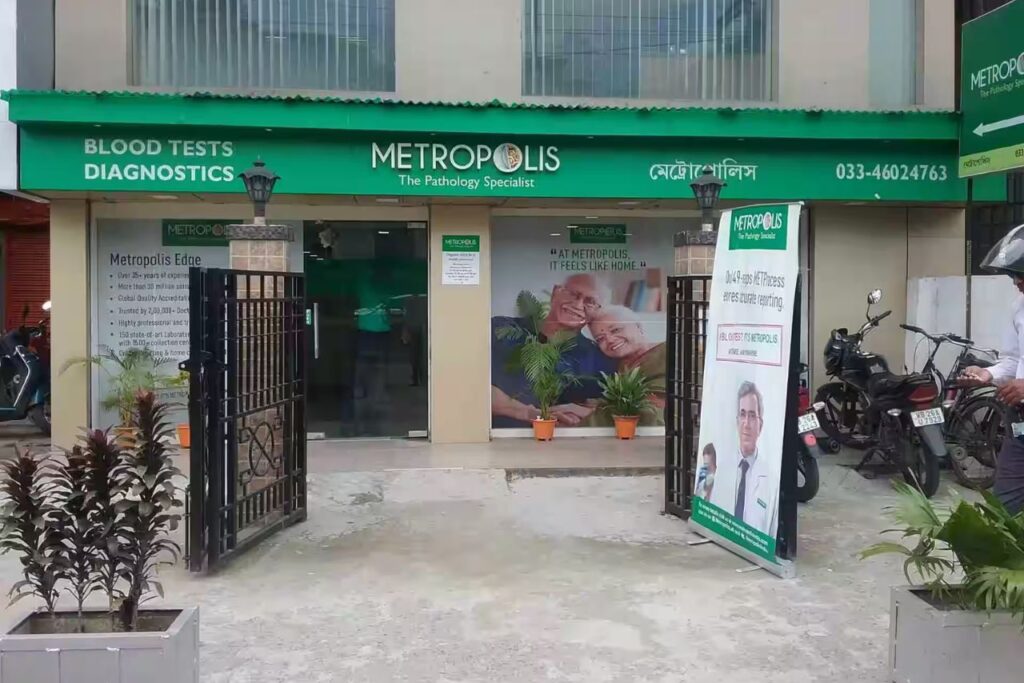
Synopsis: Metropolis Healthcare delivered strong FY26 growth driven by specialty diagnostics, genomics, digital initiatives, and operational efficiencies. Organic revenue grew 13.7% while margins expanded to 25.9%. With acquisitions integrating well and productivity improving, the company is targeting 27%–28% EBITDA margins, though sustaining such profitability alongside future growth investments remains key.
The diagnostics sector in India is set for yet another period of structural change where scale, scientific merit, speciality testing, and digitisation will prove to be key sources of differentiation. Within this context, Metropolis Healthcare continues to post one of its most successful years with organic growth and margin enhancement, acquisitions, and a strong emphasis on specialty testing and genomics.
According to Metropolis’ management, the industry is moving towards more organised players in the coming period driven by increasing consumer awareness of standards, reliability, scientific knowledge, and clinical accuracy.
The performance in FY26 was marked by organic revenues rising by 13.7% against the guidance range of 12%–13% and organic EBITDA margins expanding by about 140 basis points to reach 25.9%.
The company has also laid out its medium-term target of reaching stable group EBITDA margins at 27%–28% within three years on account of improved productivity, efficient network operations, and digital empowerment. However, the primary concern here remains how sustainable are such high EBITDA margins.
With a market cap of Rs 10,750 crore, the shares of Metropolis Healthcare Ltd are trading at Rs 519 and are trading at a PE of 55 compared to their industry’s PE of 43.3. The shares have given a return of more than 100% since their listing in April 2019.
Diagnostics Industry Shifting Toward Organized Players
Metropolis feels that there is an evolutionary trend developing within the diagnostics market of India towards structured chains due to increased consciousness about quality, trust, and scientifically accurate results. Management emphasized that diagnostic decisions are becoming more and more dependent on factors like reliability and competence in interpreting the test result rather than just cost alone.
Additionally, Metropolis feels that the overall diagnostics market will slowly move away from conventional pathology-led growth towards specialty diagnostics, wellness diagnostics, genomic diagnostics, and clinically orientated diagnostics.
It was mentioned by management that disease categories like oncology and neurology will be among the most rapidly growing segments of healthcare over the next decade, thereby leading to greater demand for specialty tests, which could easily be served through organised diagnostic chains.
However, this is especially significant in the case of Metropolis since specialist or wellness tests realise a higher margin compared to commoditised routine pathology tests. According to management, the company’s ability to build a strong physician network and utilise scientific knowledge along with standard operating processes constitutes an impenetrable moat.
Also, according to management, while competition continues to be fierce, there is no unreasonable or disruptive competitive environment in the current market condition. In other words, the price environment has remained constant, and hence companies like Metropolis have been able to concentrate more on process improvement and optimising their mix as opposed to competing on discounts.
FY26 Performance Reflects Strong Execution Across Metrics
Metropolis achieved good performance in FY26 both organically and in terms of consolidation. Organic revenue was up by 13.7% year-on-year to Rs 1,510 crores due to growth in patient volumes by 7.5% and test volumes by 8%. The organic EBITDA margin reached 25.9%, whereas the PAT was up by 33% year-on-year to Rs 194 crore.
In terms of the consolidated group, FY26 saw revenue at Rs 1,646 crore, which is an increase of 23.6% compared to last year, while the EBITDA margin was at 24.4%. The PAT grew by 31% year-on-year to reach Rs 191 crore.
Quarter 4 performance was also very strong. Organic revenue grew by 14.7%, mainly because of an increase in patient volume by 9.3% and also due to the realization improvement of around 5%. Management indicated that Metropolis did not make any price increase in the quarter due to GST considerations, suggesting that growth was mostly volume-driven and mix-driven.
It is also essential to indicate that Metropolis showed growth both in its B2C and B2B businesses. The organic B2C revenue increased by 14%, while B2B revenue increased by 13.3%. This balanced growth strategy is significant as the margin expansion is not solely tied to one business type.
Specialty Diagnostics and Genomics Emerging as Growth Engines
One of the most prominent strategic pillars of Metropolis is the rising share of specialty diagnostics and genomics. Management highlighted that specialty testing and TruHealth have continued to outperform the rest of the business in FY26. TruHealth saw a growth rate of 21%, while Specialty saw a growth rate of 16%. Specialty now represents 37% of organic revenue, and TruHealth represents 19% of organic revenue.
According to management, specialty share could keep on rising going forward, especially through the following two leverages: the genomics platform and the oncology capabilities from Core Diagnostics that will be integrated into Metropolis’s ecosystem. According to the management, specialty share could rise towards 40%.
Metropolis has made several investments in genomics platforms through the acquisition of Core Diagnostics and strengthening its genomics platform at the corporate level. The company currently has two CAP-accredited genomics laboratories in Gurgaon and Mumbai as well as an expanding network of genetic counsellors in India.
The company’s management has emphasized the importance of genomics being more about interpretative capabilities rather than machines. The strategic importance of genomics lies in its ability to improve realization per patient and deepen doctor engagement. As the company scales high-end oncology and precision diagnostics through its distribution network, the mix shift toward higher-value tests could become a meaningful contributor to sustaining higher EBITDA margins.
Productivity Improvements Becoming the Core Margin Driver
One of the primary reasons for Metropolis’ belief that it can sustain its margins in the long run is due to the structural productivity enhancement currently happening in its network. For the last two years, Metropolis has invested a lot in building its infrastructure and increasing the number of labs in its network. Management believes that it has done most of its capital expenditure in building capacity and will focus on productivity through increased throughput moving forward.
In FY26, the company has added 490 collection centres, thereby increasing the total number of collection centres to over 5,000 across 750+ towns and 212 labs. During this period, productivity within the network has also increased significantly, and the centre-to-lab ratio has moved up from 20:1 to 24:1.
Management wants to push this ratio to around 30:1 in the next 18 months and ultimately achieve a ratio of 35:1 in three years. The rationale is quite simple , since most lab infrastructure has been set up, volume increase can be managed with little capex outlay going forward.
The company has also initiated several operating initiatives such as platform enhancements for laboratory testing, consolidation of equipment vendors, bar-coding in laboratories, workflow automation, and inventory management, among others. The management believes that these efforts will result in improvement in turnaround times, efficiencies, and material efficiencies.
Productivity in the collection centres is another important component. As stated by Metropolis, mature centres have productivity in the range of Rs 3.5 lakhs to Rs 4 lakhs per centre, whereas new centres start off with very low productivity, which improves with scale. Mature centres are expected to show a productivity improvement of around 20% within three years. Such operating initiatives are critical for margin expansion for the company because these are structural improvements.
Digital Initiatives Could Improve Both Volumes and Margins
The digital transformation has been one of the key drivers of growth at Metropolis, with digital sources generating about 25% of its sales revenues, up from close to nothing before. Through its app, website, and customer engagement platform, the company is enhancing its ability to capture customers, engage with chronic care patients, and conduct repeat testing. While others focus on discount-based models of customer capture, Metropolis is using its brand name advantage to capture customers at a lower cost of acquisition, with improved retention and profitability.
Acquisitions and Integration Synergies Adding Scale
Metropolis made four acquisitions in FY26 and is already beginning to see the impact of integration on operations. Core Diagnostics was acquired when its EBITDA margin stood at -2%, but its margins have already risen to high single digits within four quarters since acquisition, whereas acquisitions in Dehradun, Agra, and Kolhapur have started delivering higher-than-company-average margins even before one year has passed.
Management said that FY26 had been dedicated to integration, platform rationalisation, and efficiency improvements and not to growth acceleration. Metropolis feels that it has now developed an integration strategy that can be applied for future M&A initiatives.
Can Metropolis Sustain Margins Beyond 28%?
Metropolis has an aim of achieving sustainable margins of 27%-28% for EBITDA over the next three years due to factors such as improvement in the specialty mix, genomics growth, digital efficiencies, network efficiencies, supplier base optimisation, and synergy benefits from acquisitions.
The management projects an increase in margins by 125-150 basis points in FY27 alone. Nevertheless, the company noted that there are other aims besides maximising profits, as the leverage effect benefits may be used for investments in technology, brands, and future growth opportunities. Nonetheless, maintaining margins above 28% would require finding a balance between growth and profitability, but the company currently seems more solid than before.
Disclaimer: The views and investment tips expressed by investment experts/broking houses/rating agencies on tradebrains.in are their own, and not that of the website or its management. Investing in equities poses a risk of financial losses. Investors must therefore exercise due caution while investing or trading in stocks. Trade Brains Technologies Private Limited or the author are not liable for any losses caused as a result of the decision based on this article. Please consult your investment advisor before investing.
The post Metropolis Healthcare: Can One of India’s Leading Diagnostics Chains Sustain Margins Beyond 28%? appeared first on Trade Brains.
Related Articles
How Investing.com’s AI Strategy Spotted the Rally in Vedanta, Nuvama and SAIL on May 1
Every investor faces the same challenge at some point:Which stocks deserve atten...

20% Upper Circuit: Stock Skyrockets After Reporting 278% YoY Growth in Net Profit
Synopsis: Modison Ltd shares hit the 20% upper circuit after its Q4 results. Rev...

Samvardhana Motherson Share: How Its 2 Segments Can Be the Next Growth Drivers?
Synopsis: Samvardhana Motherson posted strong Q4FY26 growth with higher margins,...
Adani Group Stocks to Buy Now for an Upside of Up to 24%; Do You Own Any?
Synopsis: Brokerage sees up to 24 percent upside in Adani Group stocks, supporte...