Netweb Technologies: High demand vs tight supply, Is the AI stock rally slowing?
Alex Smith
2 hours ago
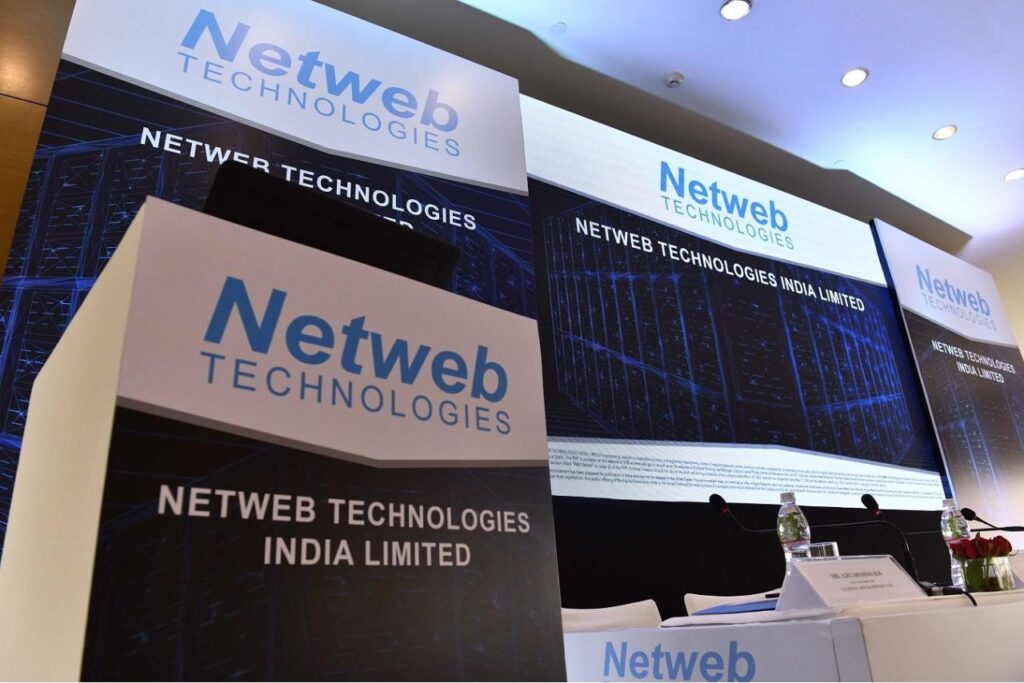
Synopsis: Rising AI demand is tightening global supply chains, with shortages in key components beginning to surface. While one company appears well-positioned to navigate these challenges, its commentary hints at a broader shift, where the next phase of the AI story may depend less on demand, and more on how effectively supply can keep pace.
The optimism around India’s artificial intelligence opportunity has largely been built on one idea: demand is only getting stronger. Companies are ordering more AI infrastructure, data centre build-outs are accelerating, and enterprises are beginning to spend more seriously on high-performance computing. But every powerful growth story eventually runs into a basic question, can supply keep up?
That is where Netweb Technologies’ Q3FY26 management commentary becomes important. The company has acknowledged that global shortages in memory, flash and storage are becoming more visible as AI adoption accelerates worldwide. Prices have moved up, availability has tightened, and the pressure is not limited to India. At first glance, that may appear to be the first real sign that the AI boom is beginning to face constraints. But a closer reading of the company’s remarks suggests something more nuanced: demand is not weakening yet, but the supply chain is starting to show stress.
The issue is global, not local
One of the clearest messages from the concall was that this is not an India-specific problem. According to management, the shortages in DRAM, HBM, flash memory and storage are being driven by a rapid surge in AI demand across global markets. In simple terms, the world wants more AI hardware than parts makers can comfortably supply right now.
That matters because these components are not minor inputs. Netweb said memory, flash and storage form a meaningful part of the bill of materials, even if the exact share varies by product configuration and customer requirement. So when shortages emerge in these categories, they can affect pricing, procurement and execution across the industry. The company’s management was direct in saying that the manufacturing capability of memory and related components is currently struggling to keep pace with the sharp rise in AI-led demand.
This is exactly why the commentary stands out. For months, much of the market conversation around AI has focused on the scale of opportunity. Netweb’s remarks shift the lens slightly. The question is no longer just how much demand exists, but whether critical component supply can expand fast enough to support that growth smoothly.
Why Netweb says it is not seeing a serious hit yet
Even as it flagged tighter supply, Netweb also made it clear that the company has so far managed the situation well. Management said deliveries have remained strong, revenue growth has been robust, and the shortages have not disrupted execution. The company credited this to proactive supply chain planning and long-standing partnerships with key technology providers. These relationships, according to Netweb, have helped it secure priority access to important components such as storage and memory.
This is an important distinction. Netweb is not saying the industry is comfortable. It is saying the industry is tight, but the company has been able to protect itself better than others because of how it operates. Its focus on higher-end, niche solutions rather than pure volume-driven box selling appears to have strengthened supplier relationships. That, in turn, seems to be giving it better support in a market where access to components is becoming more valuable.
Management also said pricing for new orders will be aligned with prevailing market conditions at the time the order is placed. In other words, if input costs move up because of shortages, Netweb believes it has a mechanism to reflect those changes in future order pricing. That gives the company some protection, at least on fresh business, even in a volatile supply environment.
Why this matters more for smaller players
If Netweb’s commentary reveals one thing, it is that supply chain quality may become a competitive advantage. The company repeatedly highlighted its planning discipline, long-term vendor ties and early access to technology roadmaps. It said it works with major vendors over the long term, gets support even during shortages, and is already working on the latest platforms including Blackwell 200 as well as newer chipsets across NVIDIA, Intel and AMD.
That is important because not every company in the AI infrastructure ecosystem may have the same visibility or supplier access. A tight market tends to reward companies with stronger relationships, better forecasting ability and more pricing discipline. It can also widen the gap between established players and those still trying to scale.
In that sense, Netweb’s message may be read in two ways. For the company itself, the tone is relatively reassuring. For the broader ecosystem, however, it is an early reminder that the AI opportunity may not be evenly accessible to everyone.
No manufacturing bottleneck for now
Interestingly, management also pushed back on the idea that manufacturing capacity is a near-term issue. Netweb said it sees itself as a capability-led rather than capacity-led organisation and believes its current facilities are sufficient to support revenue of around Rs. 2,500 crore to Rs. 3,000 crore without major new capex. That suggests the immediate constraint is not factory readiness, but component availability and the timing of order flows.
The company did caution that when a large order comes in, some smaller orders may get pushed into the next quarter. That can create short-term lumpiness in reported numbers. But management framed this more as a business mix and timing issue than a structural limitation. It also stressed that inventory planning for Q4 was in a comfortable position and said there was nothing serious to worry about on that front. That again reinforces the broader point: the system is under pressure, but it is not breaking.
Netweb is positioning itself beyond one chip ecosystem
Another point worth noting is the company’s openness to newer computing architectures. Investors raised questions around alternatives to GPU-heavy infrastructure, including ASICs and custom accelerators tied to players such as Google, Broadcom and Amazon. Management did not reveal detailed plans, but it said Netweb is working across different technologies and is not tied to any one vendor. It also said the company is fully open to working with new technologies if market adoption moves in that direction.
That flexibility matters because it reduces the risk of being overly dependent on a single supply chain. If the industry gradually shifts toward more diverse chip architectures, companies that can adapt their product stack and design capabilities early may be better placed.
This is what Netweb actually does in the AI chain
A useful clarification from the concall was around Netweb’s role in the AI ecosystem. The company is not manufacturing GPUs. Instead, it designs complete AI server systems, procures chipsets from technology partners, integrates them into its own hardware, manufactures the systems in-house and sells the finished solution to customers. Management said the company provides the full stack below the application layer, including compute, interconnect, storage, AI cloud stack and middleware. Data centre operators are its customers, not its competitors.
That distinction is important because it explains why supply shortages in memory and storage matter so much. Netweb is not a pure chip seller. It is a system integrator and manufacturer whose ability to deliver complete high-performance solutions depends on timely access to multiple critical components.
So, is this the first crack in the Indian AI story?
It would be too aggressive to call this a crack in the Indian AI story. A more accurate way to frame it is this: Netweb has flagged the first clear supply-side stress signal in an otherwise powerful demand cycle.
The demand story still looks strong. Management is not talking about order cancellations, margin pressure from old contracts, or execution slippage caused by component shortages. Instead, it is talking about robust deliveries, strong support from suppliers, healthy inventory planning and continued confidence in AI, HPC and private cloud demand.
But the commentary still matters because it shows where the next challenge could emerge. The Indian AI opportunity may remain intact, but that does not mean it will be frictionless. As AI adoption rises, the companies best placed to benefit may be the ones that can secure components early, price orders smartly, work across technologies, and stay deeply connected to the global hardware ecosystem.
That is why Netweb’s signal should not be ignored. It may not be the first sign of the Indian AI story weakening. But it could well be the first sign that the battle is shifting, from proving demand to managing supply.
Disclaimer: The views and investment tips expressed by investment experts/broking houses/rating agencies on tradebrains.in are their own, and not that of the website or its management. Investing in equities poses a risk of financial losses. Investors must therefore exercise due caution while investing or trading in stocks. Trade Brains Technologies Private Limited or the author are not liable for any losses caused as a result of the decision based on this article. Please consult your investment advisor before investing.
The post Netweb Technologies: High demand vs tight supply, Is the AI stock rally slowing? appeared first on Trade Brains.
Related Articles

5 Stocks in Which FIIs Have Increased Their Stake by Up to 22% in Q4; Do You Own Any?
Synopsis: Foreign Institutional Investors (FIIs) have significantly increased th...

Top 4 Auto stocks riding the EV wave amid India’s LPG shortage
Synopsis: The ongoing gas crisis of April 2026 has accelerated a structural shif...

Varun Beverages trading down by 30%; Should you buy, sell or hold?
Synopsis: Varun Beverages has fallen nearly 30 percent from its highs, raising c...
B.R. Goyal Infrastructure Hits High Gear with Rs 1,347 Crore Order Book
Synopsis: B.R. Goyal Infrastructure Limited (BRGIL) is solidifying its position...