₹3,080 Cr CAPEX: Can PLA Become Balrampur Chini’s Next Growth Story?
Alex Smith
1 hour ago
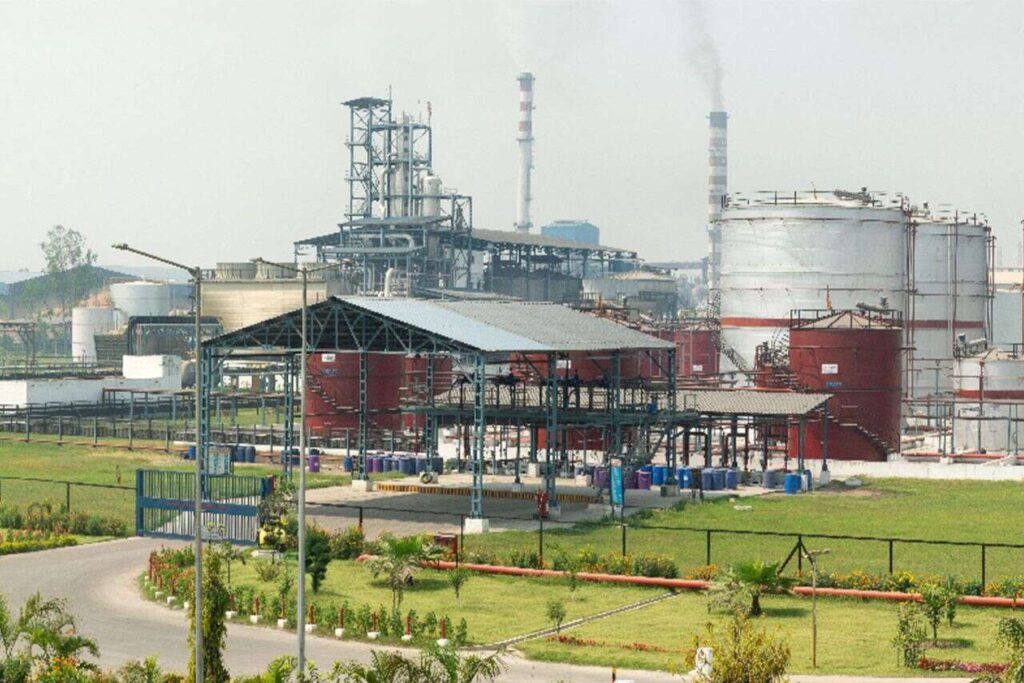
Synopsis: Balrampur Chini Mills is making a bold Rs 3,080 crore bet on PLA, signalling a strategic move beyond sugar and ethanol. With on-track commissioning, by-product monetisation through gypsum boards, additional capital raising, and promoter participation, the company appears to be building a new sustainable materials platform that could create a meaningful long-term growth vertical.
For decades, Balrampur Chini Mills has built its identity around sugar, ethanol, and power. However, the company’s latest strategic update suggests it is preparing for a much larger transformation. At the centre of this transition is its Rs 3,080 crore polylactic acid (PLA) project, a significant investment aimed at creating a new business vertical. Alongside PLA, the company is also monetising by-products, raising fresh capital, and positioning itself within the growing sustainable materials opportunity.
With a market cap of Rs 10,600 crore, the shares of Balrampur Chini Mills Ltd are trading at Rs 525 and are trading at a PE of 23.7 compared to their industry’s PE of 14.4. The shares have given a return of more than 65% in the last 5 years.
A Strategic Shift Beyond Traditional Sugar Economics
For many years now, Balrampur Chini Mills has been identified as a key player in the Indian sugar industry. However, in its recent presentation to investors, which took place in April 2026, it was made evident by management that the firm is now gearing up for what it referred to as its “next phase”.
This transition is being spearheaded by none other than what has been described by management as “one of the largest capital expenditures” ever made by the company. The project in question is none other than the development of polylactic acid, or PLA, production capacity. Management referred to the project as a “key strategic initiative”, as well as one of the ways by which growth would be achieved in the organisation.
A ₹3,080 Crore Investment Signals Long-Term Commitment
The initial estimates for the cost of the PLA at Balrampur were around Rs 2,850 crore when the company made this announcement. However, in the latest news, management mentioned a cost overrun of Rs 230 crore, which increased the total cost to Rs 3,080 crore.
The causes mentioned were diverse, but most of them seemed to be external. Management cited higher costs of construction material, disruptions in the international logistics chain, foreign currency fluctuations, and additional design requirements from the final engineering process.
As per Chairman Vivek Saraogi, the last 90% engineering review added some design changes, while disruptions in logistics and increased supplier prices further contributed. Nonetheless, there was no hint from management of any reduction in the scale or timeline of the project due to these additional costs.
Why the Cost Escalation May Not Alter the Bigger Thesis
One of the important questions posed by the investors was about whether the increase in cost related to structural shifts in project economics or efficiency gains. Management conceded that minor engineering adjustments could help achieve efficiencies in cost, but at this stage, there was no way to measure its impact.
Larger factors impacting the increase in cost seemed to be more macro in nature. One such factor was the rise in the value of the Euro, which had increased from 90 to 110 and added to the cost of imported machinery. Shipping delays related to political issues had also added to shipping costs.
For instance, management shared that shipping a single part of the machinery involved a cost of Rs 9 crore for two shipments, which took around four months’ time. Nevertheless, management stated that machinery might arrive sooner rather than later, signalling the end of any material change in cost.
Commercial Commissioning Remains on Track
However, in the case of major industrial ventures, cost overruns may be followed by delays. In respect of timelines, however, management at Balrampur was optimistic. Responding to the question regarding the commissioning time frame, the management stated that the PLA plant will be commissioned in the third quarter.
The response came in an objective fashion and not an optimistic one. While stating that the execution process was difficult, management did state that nothing had been left untried in order to stay within the schedule of time. It is important for investors since the ability to commission on schedule despite difficult economic conditions can indicate that the firm is adept at executing projects.
PLA Capacity Creates Scale From Day One
Although the transcript did not discuss PLA economics, which was the overall theme of the discussion during the last meeting, the magnitude of the platform was re-stated. Management reiterated that the company is working on an 80,000-tonne-per-year production capacity of PLA.
This magnitude is significant in the sense that it shows that the company is not experimenting with the technology in pilot production phases. It is directly jumping onto its commercial capacity. In response to the question about any change in the economics of the PLA platform project due to the by-product initiative, the management stated that there has been no change in the economics of the main project.
Turning By-Products Into a New Business Opportunity
What may be of interest about the update is not necessarily what has been done but what will be done with the by-products of the plant. While announcing the PLA plant, the board had also approved an investment plan for a lactogypsum processing unit to be located in Kumbhi.
According to management, lactogypsum is an environmentally friendly by-product produced from PLA production. This will be processed to produce gypsum boards. The investment required for this project is Rs 160 crore, and the projected capacity is 76 lakh gypsum boards per year, with commercial production being achieved in 18 months.
Instead of disposing of the by-product at a loss, this process can create a new value chain for Balrampur. Management highlighted that just like how Balrampur ventured into co-generation as a solution to a problem, here too, a by-product is being processed to generate income.
A Circular Economy Model With Visible Revenue Potential
The economics of the by-product business seem relevant. As per the management, for every 80,000 tonnes of PLA produced, there would be a generation of lactogypsum in the range of 1.16 lakh tonnes to 1.2 lakh tonnes of material.
This quantity can be made into approximately 63 lakh gypsum boards. Even more interestingly, the management expects revenues worth Rs 150 crore every year out of this particular business. On probing further about the profitability, management declined giving any specific numbers regarding margins but did give a payback period of around five years.
The payback period takes into account transfer pricing related to the utilisation of utilities such as steam and power in this process. Moreover, management mentioned that the price of gypsum boards has already risen by around 25% recently because of the global situation.
Funding the Expansion Without Losing Financial Discipline
The issue of leverage, dilution, and balance sheet pressure arises frequently for major projects. In order to finance the additional Rs 390 crore expenditure due to the excess costs involved in the PLA project and the gypsum board factory, the board of directors of Balrampur Chini Mills Ltd decided to allocate a preferential offer for the issue of equity shares worth about Rs 450 crore, which will be sold at Rs 483 per share.
The board also passed a resolution for raising Rs 200 crore by way of debenture issue. It was also stated by management that the issue is only a dilution of 5% and that the promoters are contributing in proportion. The promoters are investing around Rs 193 crore, and hence, there will be no change in the family holding of 43%.
Management also highlighted that the purpose of raising funds goes beyond merely financing projects. With the coming of the sugar season and the need for purchasing cane, liquidity management and maintaining ratings without affecting financial ratios were equally critical.
Can PLA Become Balrampur’s Next Growth Vertical?
Balrampur’s recent update does not only mean a mere capex revision, but it gives the impression of a firm that tries to create value through a different approach in the operation of its ecosystem.
A capex requirement of Rs 3,080 crore, the on-track commissioning schedule, a Rs 160 crore opportunity downstream for gypsum boards, by-products worth Rs 150 crore per annum, a promoter investment of Rs 193 crore and a capital structure designed to ensure that there are no negative implications for the balance sheet appear to constitute a well-thought-out strategy.
However, the repeated focus of the management of Balrampur on value creation from the waste products and creating opportunities in the value chain suggest that the PLA project may not be a stand-alone project but the base of a material platform.
The extent to which this vision of the management comes true depends on the successful execution. commercialisation and market adoption of their idea. Nonetheless, based on the information provided in the transcript, it seems that this project has become much more than a diversification effort for Balrampur.
Disclaimer: The views and investment tips expressed by investment experts/broking houses/rating agencies on tradebrains.in are their own, and not that of the website or its management. Investing in equities poses a risk of financial losses. Investors must therefore exercise due caution while investing or trading in stocks. Trade Brains Technologies Private Limited or the author are not liable for any losses caused as a result of the decision based on this article. Please consult your investment advisor before investing.
The post ₹3,080 Cr CAPEX: Can PLA Become Balrampur Chini’s Next Growth Story? appeared first on Trade Brains.
Related Articles

EV Stocks: How Rising Oil and Lithium Prices Erode Margins?
Synopsis: India’s EV story is in a strong upcycle, but rising lithium prices are...
Aditya Birla Real Estate Q4 FY26: Company Returns to Profit and ₹2.5 Dividend Announced
Synopsis: Aditya Birla Real Estate Ltd reported a turnaround performance in Q4 F...
South Indian Bank Q4 FY26: Net Profit Grows 19% YoY and ₹0.45 Dividend Announced
Synopsis: South Indian Bank reported a steady Q4 FY26 performance with improveme...
Fairchem Organics Posts a Painful FY26 Revenue Falls 14% and PAT Drops 75%
Synopsis:- Fairchem Organics reported a meaningful Q4 recovery, with quarterly p...