Rupee at ₹91: What Rupee Depreciation Means for India’s Equity Markets
Alex Smith
1 month ago
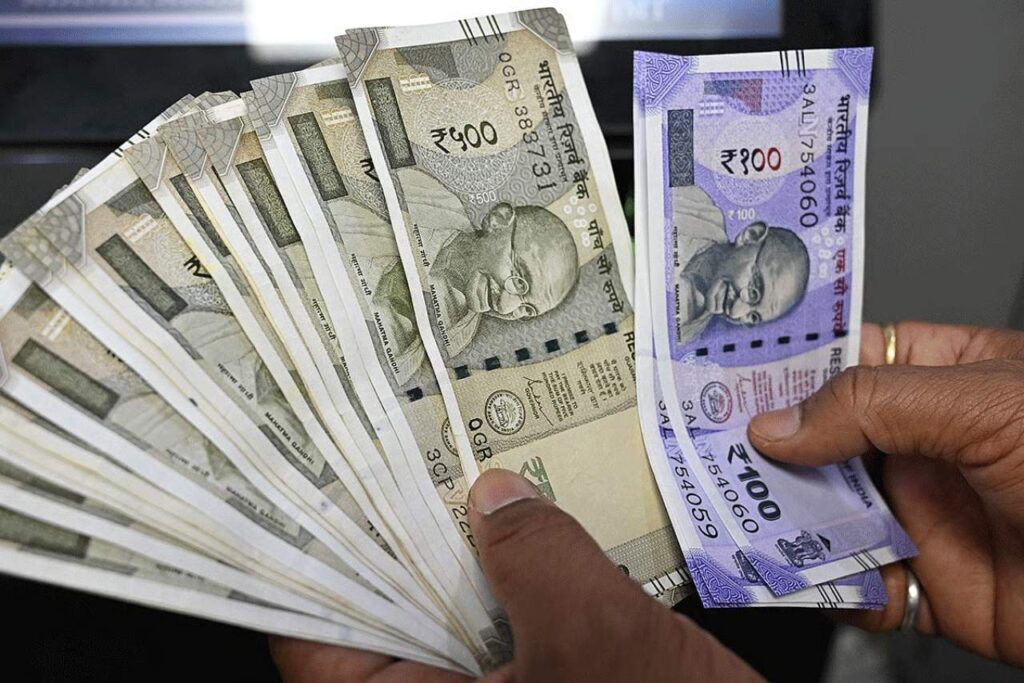
Synopsis: As the Indian rupee falls to Rs. 91 against the US dollar, it has started to impact the stock market. A weaker rupee can help exporters but hurt companies that depend on imports, while also influencing foreign investor sentiment. This makes it important to understand what a Rs. 91 rupee means for India’s equity markets.
The value of a country’s currency plays an important role in shaping its economy and financial markets. When the Indian rupee weakens against the US dollar, it affects businesses, investors, and overall market sentiment. Understanding this relationship helps explain how movements in the rupee can influence India’s equity markets.
Rupee Near Record Lows
The Indian rupee has been trading close to record low levels against the US dollar, briefly slipping past the 91-per-dollar mark before recovering to close around Rs. 90.37, following likely intervention by the Reserve Bank of India through state-owned banks. It reflects sustained pressure from global and domestic factors rather than any sudden macroeconomic shock.
Not a Current Account Crisis
Economists widely agree that the current episode of rupee weakness is not driven by a deterioration in India’s trade fundamentals. The current account deficit remains contained at around 1–1.3 percent of GDP, a level that India has comfortably financed in the past. This distinguishes the present situation from past currency stress episodes and limits the risk of a systemic crisis spilling over into equity markets.
Capital Account Pressures
The primary pressure on the rupee is coming from the capital account. Portfolio outflows, profit repatriation by foreign investors, and a slowdown in net foreign direct investment have reduced dollar inflows. The rupee has declined by 6.92 percent this year, placing it among the weaker emerging market currencies, as global trade uncertainty and US tariff policies have weighed on investment sentiment.
Impact on Equity Market
A falling rupee tends to increase short-term volatility in Indian equities. Currency weakness raises concerns around foreign investor exits, inflation, and earnings sustainability, often leading to cautious market sentiment. Benchmark indices may come under pressure even if domestic fundamentals remain intact, especially during periods of heavy FII selling.
Trade Negotiations and Global Sentiment
Market sentiment around the rupee is also influenced by uncertainty over US trade policy and tariffs. While negotiations between India and the US are ongoing, the lack of clarity has weighed on investor confidence. Any concrete progress toward a trade agreement could revive foreign inflows and reduce speculative pressure on the currency.
Export-Oriented Sectors
Rupee depreciation is generally supportive for export-driven sectors. IT services, pharmaceuticals, specialty chemicals, and textiles earn a significant share of revenues in foreign currencies. When these earnings are converted into rupees, revenues and operating margins improve, which can lead to better earnings visibility and relative outperformance of these stocks in the market.
Import-Dependent Sectors
In contrast, companies with high import dependence face rising input costs when the rupee weakens. Sectors such as oil & gas, aviation, electronics, capital goods, and FMCG firms reliant on imported raw materials see margin pressure unless they can pass on higher costs to consumers. This often results in earnings downgrades and weaker stock performance.
Inflationary Impact
A weaker rupee raises the cost of imported commodities, particularly crude oil, contributing to inflationary pressures. Higher inflation limits the Reserve Bank of India’s ability to cut interest rates and may necessitate a prolonged tight monetary stance. This environment is typically negative for interest-rate-sensitive sectors such as real estate, automobiles, NBFCs, and infrastructure.
Currency Risk
For foreign investors, currency depreciation directly affects returns. Even when Indian equities deliver positive returns, a weakening rupee can erode gains in dollar terms. This currency risk often leads FIIs to reduce exposure or stay cautious, increasing market volatility and keeping equity flows subdued, particularly in the debt segment.
Role of Foreign Direct Investment
Economists highlight the revival of net FDI inflows as a key factor in stabilising the rupee. India earlier financed higher current account deficits when annual FDI inflows were significantly stronger. Unlike portfolio flows, FDI is long-term and stable capital, and a pickup in net FDI would ease pressure on the rupee while improving confidence in equity markets.
Nominal GDP Growth and Investor Returns
Nominal GDP growth reflects the potential returns global investors can earn in India. After strong growth of 12 percent in FY24, nominal growth has slowed to 10 percent in FY25 and currently at 8 percent, compressing expected returns in dollar terms. A revival in nominal GDP growth, through faster real growth or improved pricing power would strengthen India’s equity appeal and support capital inflows.
Valuation Concerns
Indian equities have underperformed several global markets over the past year and continue to trade at relatively higher valuations. This combination has reinforced foreign outflows. A sustained improvement in earnings delivery and a moderation in valuations could help attract both portfolio and direct equity investments, easing pressure on the rupee.
RBI’s Calibrated Intervention Strategy
Despite near-term volatility, India’s macro fundamentals remain stable, supported by strong services exports, rising remittances, and manageable import dynamics. With foreign exchange reserves in the range of $675–690 billion, the RBI has ample capacity to manage disorderly moves. Its approach of allowing the rupee to adjust gradually while intervening selectively helps maintain long-term market stability.
Short-Term Volatility vs Long-Term Effects
In the short term, rupee depreciation usually increases stock market volatility due to foreign outflows, inflation concerns, and earnings uncertainty. However, if the depreciation is gradual and driven by global factors like a strong US dollar, markets often adjust without severe damage. Over the medium to long term, a competitive currency can support exports, improve corporate earnings for export-heavy sectors, and aid GDP growth, which can eventually turn supportive for equities.
Conclusion
Rupee depreciation at Rs. 91 is reshaping, rather than derailing, India’s equity market. It creates clear sectoral winners and losers, increases short-term volatility, and heightens the importance of balance sheet strength and pricing power. For investors, selective stock picking and sector allocation become more critical, as the rupee’s trajectory will continue to influence earnings, flows, and overall market direction.
Written by Akshay Sanghavi
Disclaimer
The views and investment tips expressed by investment experts/broking houses/rating agencies on tradebrains.in are their own, and not that of the website or its management. Investing in equities poses a risk of financial losses. Investors must therefore exercise due caution while investing or trading in stocks. Trade Brains Technologies Private Limited or the author are not liable for any losses caused as a result of the decision based on this article. Please consult your investment advisor before investing.
The post Rupee at ₹91: What Rupee Depreciation Means for India’s Equity Markets appeared first on Trade Brains.
Related Articles

Mukul Agrawal stock jumps 6% after reporting 675% profit growth in Q3
Synopsis: Shares of Valor Estate Ltd surged 6% after the company reported a 675%...

Railway Stock Jumps 5% After Announcing Q3 Results and Securing ₹411 Cr KAVACH Equipment Order
Synopsis: Kernex Microsystems shares rose 5% after winning a Rs. 411.17 crore or...

Hindustan Unilever: Why Did This FMCG Stock Crash 5% Despite Reporting 121% Profit Growth?
Synopsis: A large-cap FMCG stock fell over 5% despite 121% YoY profit growth, as...

Why Did Wipro, Infosys, and TCS Crash by Up to 5% in Today’s Session?
Synopsis: Shares of Wipro, Infosys, TCS and other IT majors slid up to 5% after...