Safari Industries Q4 FY26 Profit Climbs 17.5% to ₹167 Cr; Declares ₹2 Dividend
Alex Smith
1 hour ago
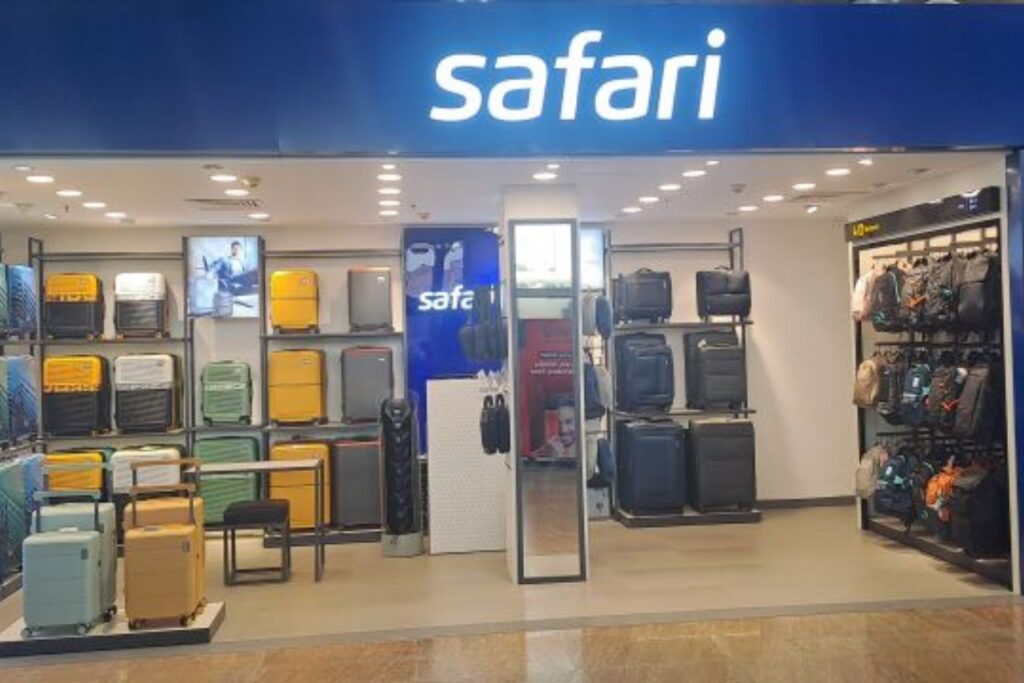
Synopsis:- Against a backdrop of rising input and distribution costs, Safari Industries has posted consolidated revenue of Rs. 2,047 crore for FY2025-26 up 15.5 percent with net profit growing 17.5 percent to Rs. 167.76 crore, while the Board has recommended a final dividend of Rs. 2 per share; the Q4 performance, however, shows net profit nearly flat year-on-year, flagging that margin expansion from here will require either operating leverage or a favourable shift in the product mix.
Shares of one of India’s largest luggage manufacturers came into focus on May 19, 2026, after the Board of Directors approved audited standalone and consolidated financial results for the quarter and year ended March 31, 2026 along with a recommendation of a final dividend of Rs. 2 per share of face value Rs. 2 each, subject to shareholder approval at the Annual General Meeting.
With a market capitalization of Rs. 7,006.13 crore, the shares of Safari Industries (India) Limited were trading at Rs. 1,430 per share, up 0.25 percent from its previous close of Rs.1,426.4. The stock is trading at a P/E of 41.62.
Revenue and Profitability: Consistent, Not Spectacular
On a consolidated basis, revenue from operations for FY2025-26 came in at Rs. 2,047.02 crore, up 15.5 percent from Rs. 1,771.58 crore in FY2024-25. Total income including other income was Rs. 2,071.81 crore against Rs. 1,800.05 crore the previous year. Profit before tax grew 16.6 percent to Rs. 216.34 crore, and net profit after tax settled at Rs. 167.76 crore compared to Rs. 142.80 crore in FY25, a 17.5 percent increase. Consolidated basic EPS rose to Rs. 34.27 from Rs. 29.24, a year-on-year improvement of roughly 17 percent.
The numbers tell a consistent story of a business growing broadly in line with industry trends not accelerating, not slipping. Revenue growth of 15.5 percent in a year when the premium travel luggage segment faced some normalisation in demand after the post-pandemic surge is a reasonable outcome. Critically, the company managed to grow profits faster than revenue, which implies a marginal improvement in operating efficiency even as the absolute cost base expanded.
The Cost Picture: Expenses Rising Across the Board
The consolidated cost structure deserves attention. Cost of materials consumed expanded to Rs. 638.80 crore from Rs. 592.85 crore, consistent with higher in-house hard luggage production from the Halol, Gujarat plant. Purchases of stock-in-trade primarily imported soft luggage fell to Rs. 412.26 crore from Rs. 441.77 crore, reflecting a gradual shift in mix toward manufactured products rather than trading, which should support margins over time.
Employee costs rose to Rs. 143.62 crore from Rs. 118.96 crore, a 20.7 percent jump that reflects both headcount addition and the mandatory restatement of gratuity and leave encashment obligations following the November 2025 Labour Code notification. Other expenses, which include advertising, distribution, and retail-related costs, climbed to Rs. 549.92 crore from Rs. 465.24 crore, an 18.2 percent rise that outpaced revenue growth.
For a consumer brand competing with Samsonite and VIP Industries on shelf space and digital advertising, this line will bear watching: if the distribution build-out generates proportional revenue traction, the spending is defensible; if not, it will show up as margin compression in FY27.
Total consolidated expenses were Rs. 1,855.47 crore against Rs. 1,614.48 crore in FY25, growing at 14.9 percent against revenue growth of 15.5 percent, a narrow but real positive gap that kept the profit expansion intact.
Q4 FY26
The March 2026 quarter was more mixed on a standalone look. Consolidated Q4 revenue from operations came in at Rs. 473.30 crore, up 12.4 percent from Rs. 421.06 crore in Q4 FY25. However, consolidated net profit for the quarter was Rs. 37.47 crore against Rs. 37.59 crore a year ago effectively flat. Profit before tax of Rs. 49.06 crore was also marginally lower than Q4 FY25’s Rs. 49.43 crore. The sequential comparison is softer too Q3 FY26 reported a pre-tax profit of Rs. 41.74 crore on revenue of Rs. 512.37 crore which suggests Q4’s lower revenue did not translate into higher profits due to increased costs in the final quarter.
Other expenses for Q4 at Rs. 133.38 crore consolidated (versus Rs. 115.01 crore in Q4 FY25) stand out as a primary driver of this margin compression. Higher trade promotions, channel incentives, or year-end advertising spend ahead of the summer travel season are the likely explanation, but the trend reinforces that growth in Safari’s case currently comes with proportionally higher go-to-market cost.
Cash Flow Improvement
One notably positive data point from the filing is the improvement in consolidated operating cash flow. Net cash generated from operating activities for FY26 was Rs. 173.36 crore, more than three times the Rs. 57.32 crore generated in FY25. This was aided by better working capital management inventory levels fell on an absolute basis during the year (from Rs. 350.44 crore to Rs. 330.06 crore consolidated), and debtor days, which had been trending higher in FY25, showed signs of normalization.
For a business with a 109-day cash conversion cycle, meaningful working capital discipline translates directly into cash generation, and the FY26 number suggests the management has tightened receivables management.
Consolidated capital expenditure was Rs. 70.44 crore, directed primarily toward expanding and upgrading the Halol manufacturing plant and investing in retail infrastructure. The balance sheet remains comfortably geared: total consolidated borrowings stand at approximately Rs. 92.92 crore (lease liabilities) with minimal financial debt, giving the company room to fund further capacity expansion without stress.
Dividend
The Board has recommended a final dividend of Rs. 2 per share the same as the previous year’s payout. At the current price of Rs. 1,488, this translates to a dividend yield of approximately 0.13 percent, which is nominal in absolute terms but signals management’s confidence in the sustainability of earnings. The dividend will be paid on or before September 3, 2026, subject to AGM approval.
Business Overview
Safari Industries (India) Limited, incorporated in 1980 and listed on both exchanges, is a Mumbai-headquartered luggage manufacturer operating under the Safari brand. The Group includes two wholly owned subsidiaries, Safari Manufacturing Limited and Safari Lifestyles Limited, and produces both hard luggage (in-house at its Halol plant using polypropylene and polycarbonate) and soft luggage (primarily imported). The company operates a single business segment, the luggage business and competes directly with Samsonite, VIP Industries, and American Tourister across online and offline retail channels.
Disclaimer: The views and investment tips expressed by investment experts/broking houses/rating agencies on tradebrains.in are their own, and not that of the website or its management. Investing in equities poses a risk of financial losses. Investors must therefore exercise due caution while investing or trading in stocks. Trade Brains Technologies Private Limited or the author are not liable for any losses caused as a result of the decision based on this article. Please consult your investment advisor before investing.
The post Safari Industries Q4 FY26 Profit Climbs 17.5% to ₹167 Cr; Declares ₹2 Dividend appeared first on Trade Brains.
Related Articles

Monte Carlo Fashions Posts Q4 Turnaround with ₹5.04 Cr Profit; Declares ₹20 Dividend
Synopsis: Monte Carlo Fashions Ltd reported a recovery in its Q4 FY26 performanc...
KEC International: Is It the Right Time to Buy After a 15% Crash Following Q4 Results?
Synopsis: The share of this company fell nearly 15 percent after Q4 FY26 results...

Defence Stock Jumps 10% After Announcing 12x Weapons Manufacturing Expansion Plan
Synopsis: A Hyderabad-based defence electronics maker posts its best-ever quarte...

Chemical Stock Jumps 13% After Reporting 313% YoY Increase in Net Profit
Synopsis:- Riding a 313 percent annual jump in net profit and consolidated reven...