Sagility: How Rising U.S. Medical Costs Are Fueling Its Growth Engine
Alex Smith
2 hours ago
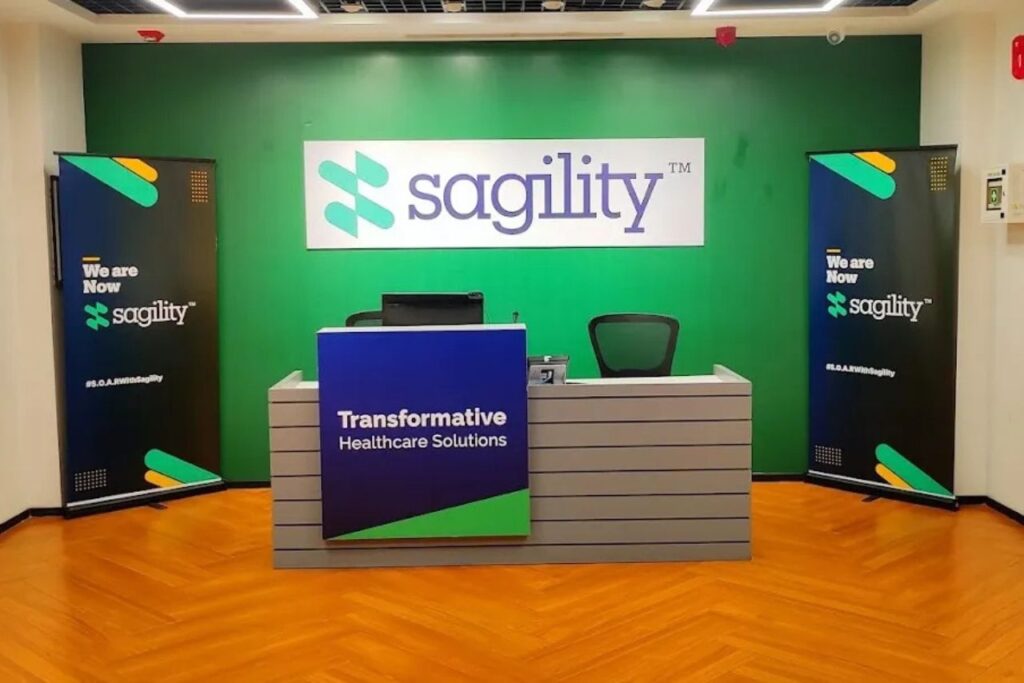
Synopsis: Rising medical costs in the U.S. are driving margin pressure for healthcare payers, forcing a shift toward cost optimisation and outsourcing. Sagility, with deep domain expertise and strong client relationships, is well-positioned to benefit from this trend, making it a structural growth story supported by technology-led transformation and increasing demand for operational efficiency.
The U.S. healthcare industry is witnessing a sharp rise in medical costs, driven by higher utilisation, demographic shifts, and increasing treatment expenses. This has placed significant pressure on healthcare payers, leading to margin compression and a greater focus on cost efficiency. As a result, companies are increasingly looking for ways to optimise operations and reduce expenses. In this evolving landscape, service providers that enable efficiency, scalability, and cost savings are emerging as key beneficiaries of these structural changes.
A Scaled Player At the Heart of Healthcare Transformations
Sagility is one of the notable players in the area of healthcare operations and technology services, having a specialised focus on the U.S. healthcare market. The revenue generated by the company comes almost entirely from its clients within the U.S. healthcare market, where the payers account for approximately 87%–88% of the total revenues of the company.
Over the years, Sagility has developed significant and long-standing ties with some of the major players within the United States healthcare market, currently working with 7 out of the top 10 payers and having an average relationship period of almost 18 years.
Further supporting the scale of operations, Sagility has managed to employ more than 40,000 people and operate 35 delivery centres across 5 geographies, processing more than 1.37 billion transactions every year.
The company’s financial performance also indicates good growth, with a revenue base of $658 million recorded during FY25 and YoY growth of 14.9%. The EBITDA margin and PAT margin have been noted at approximately 25.5% and 15.9%, respectively.
Regulatory and Market Disruptions Intensifying the Challenge
In addition to all that has been mentioned above, the payer space is affected by various disruptions, both in terms of policy change and market changes. One example of the former is spending cuts in the area of Medicaid, which will affect the number of enrolments. In turn, Medicare is supposed to maintain stable reimbursement rates despite the growth in utilisation rates. Finally, the elimination of Affordable Care Act subsidies has caused a decrease in the total number of people enrolled, with the industry experiencing a sharp fall in new consumers and some reduction in memberships.
All that creates a two-sided problem since payers have to deal with higher costs but at the same time cannot be sure about their income because of changing membership rates. As it follows from the transcript, the aforementioned combination of circumstances is causing margin compression and forcing the payer space to apply cost-saving strategies.
At the same time, the healthcare industry is quite complex and has certain features that complicate the process of introducing innovations. These include a complicated regulatory environment, lack of integration of systems, and complexity of relationships between payers, providers, and members.
Sagility’s Deep Integration Across the Value Chain
Sagility has one major differentiator in that it operates deeply in all of its clients’ operations along the healthcare value chain. Specifically, the firm provides a variety of services, including member lifecycle management, provider lifecycle management, claim management, clinical operations, and payment integrity.
From a service perspective, Sagility has developed considerable domain expertise, which makes it able to have better knowledge about how each of its clients operate. With greater knowledge about its clients’ operations, Sagility is able to deliver its services more efficiently. According to the transcript, the company knows about its clients’ systems as well as or even better than its clients do.
Finally, one of the key features of the company is that it offers non-discretionary services. In other words, healthcare payers should continue their operations regardless of market conditions. In turn, this makes it imperative for healthcare payers to seek operational assistance from external companies like Sagility.
Cost Pressures as a Structural Growth Driver
The ongoing situation with escalating medical costs and margin pressures translates directly to increasing demands on outsourcing and transformation. The payers’ desire to cut costs is pushing them to find partners who can help them achieve efficiency gains and reductions in costs.
In this situation, Sagility’s competitive advantage is being leveraged by its ability to achieve cost efficiencies and reductions at scale. With experience and know-how in the healthcare market, it is capable of effecting the desired changes without causing any disruptions to the business operation of its clients.
As evident from the transcript above, margin pressures among the company’s clients have become an external positive catalyst for Sagility. In its efforts to save money on administration, the payer industry is getting increasingly engaged with outsourcing partners.
This phenomenon is well illustrated by the company’s performance in terms of growth. In spite of the difficulties that have been encountered by the industry, the company reported strong growth both in terms of top accounts and overall portfolio.
Technology and AI as Enablers of Transformation
Moreover, technological transformation plays a key role in the development of Sagility. In recent years, the company has moved from process optimisation to more sophisticated digital and artificial intelligence-driven technologies.
Initially, process optimisation methods, including Six Sigma and business process reengineering, were applied. Subsequently, digital technologies, such as robotic process automation and analytics, were implemented. In recent years, Sagility has started to implement generative AI and agentic AI into its operations.
Nevertheless, the implementation of artificial intelligence poses some barriers in the healthcare industry because of regulatory restrictions, security issues, and the need to exercise human oversight when making clinical decisions. To overcome these barriers, the company applies a hybrid model that leverages the advantages of both AI and human intelligence.
It is essential to note that at Sagility, AI acts as a force multiplier rather than a disruptor. Automation can result in increased efficiency, while new opportunities to offer additional services will arise.
Evolving Business Models and Expanding Opportunity
Sagility is also adapting its business strategy to exploit the newly available business opportunities in the healthcare industry. One of the notable changes includes shifting to an engagement strategy focused on achieving tangible cost savings and efficiency gains for clients.
In doing so, Sagility will have its interests aligned with its client base, making it possible for it to extract more value from its services. The firm is also working towards adopting an integrated platform business strategy, incorporating technology and AI in its operations.
Through this move, Sagility will be able to deliver end-to-end transformation for its clients while becoming scalable as well. Another important change includes expansion to mid-size clients and additional service offerings, widening Sagility’s target addressable market. Notwithstanding the tough business environment, Sagility has managed to sustain its growth trajectory.
Conclusion: A Structural Growth Story Backed by Industry Dynamics
From an analytical perspective, Sagility’s success hinges on the structural shifts occurring within the American healthcare system. The rising cost of health care services, higher MLRs, and regulatory complexity compel insurance companies to evolve their business models to increase efficiency.
Under such conditions, the firm’s expertise in offering solutions in health care operations transformation offers it a distinct edge. Its extensive domain knowledge, long history of client engagement, and technology-based competencies allow it to offer relevant solutions to its customers.
Although cyclical factors can impact performance in the short term, the fundamental forces behind the firm’s growth are structural in nature. The increased prevalence of outsourcing, the necessity for cost reduction and the use of technology-based solutions represent enduring trends that are likely to continue into the future.
From an analytical standpoint, rising medical costs in the United States are not merely a barrier to the health care industry but are a major driver for Sagility’s growth. This makes it an attractive growth stock with favourable fundamentals.
Disclaimer: The views and investment tips expressed by investment experts/broking houses/rating agencies on tradebrains.in are their own, and not that of the website or its management. Investing in equities poses a risk of financial losses. Investors must therefore exercise due caution while investing or trading in stocks. Trade Brains Technologies Private Limited or the author are not liable for any losses caused as a result of the decision based on this article. Please consult your investment advisor before investing.
The post Sagility: How Rising U.S. Medical Costs Are Fueling Its Growth Engine appeared first on Trade Brains.
Related Articles

Umiya Buildcon Shares Gain 8% as Net Profit jumps 700% In FY26
Synopsis: Umiya Buildcon Limited (formerly MRO-TEK Realty) announced its audited...
3 Mukul Agrawal Stocks That Turned Multibaggers in a Year
Synopsis: Three Mukul Agrawal-backed stocks delivered strong multibagger returns...

1:3 Bonus Share: Bank Stock Jumps 8% After Strong Q4 Results and 200% Dividend
Synopsis: City Union Bank Limited reported strong Q4 FY26 growth with higher pro...

Jain Resource: How Copper Recycler Is Transforming into Global Non-Ferrous Metals Powerhouse
Synopsis: A Chennai-based non-ferrous metal recycler with seven decades of roots...