Silver Rates: Will It Mirror the 2011 Crash or Scale New Record Highs?
Alex Smith
1 week ago
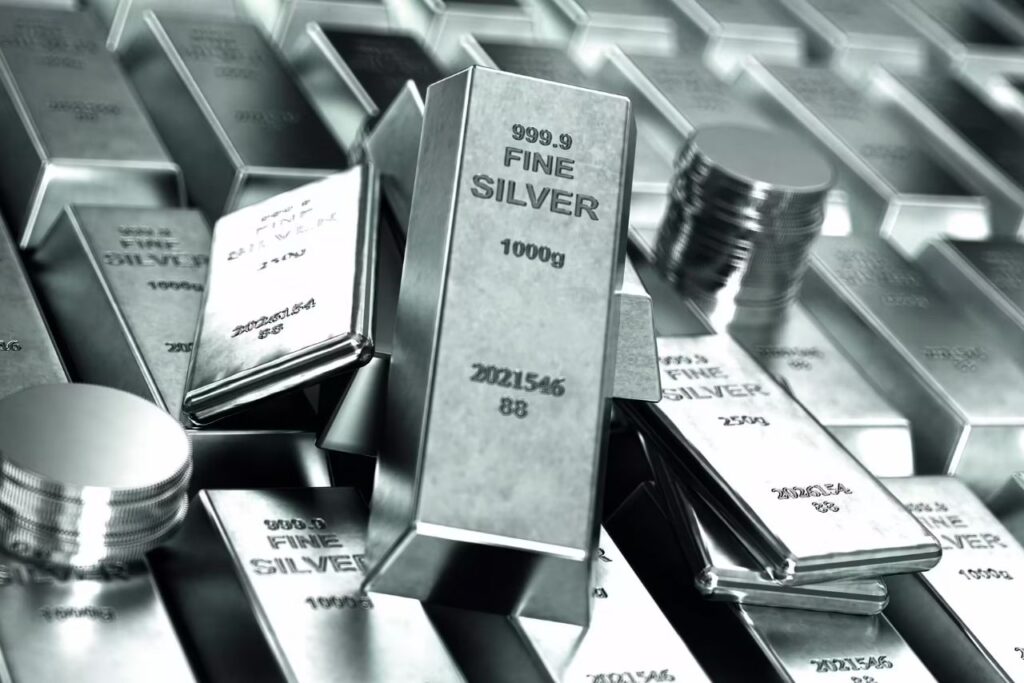
Synopsis: Silver in 2026 is under the spotlight, with prices surging over $117 per ounce and over Rs. 4,06,000 in Silver MXC Future, amid strong industrial demand, solar PV growth to 665 GW, and supply constraints, raising questions of a repeat of 2011 or new highs.
Silver is drawing fresh attention in 2026 as global markets navigate economic uncertainty, inflation concerns, and changing industrial demand. Traders and investors are monitoring price movements closely, while shifts in monetary policy and global trade continue to influence sentiment around the precious metal. Its performance this year is becoming a key talking point across financial news and commodity markets.
As on 29 January 2026, the silver (US$/OZ) is trading at $117.78, which has given a return of 63.57 percent in 1 month, 221.52 percent in 6 months, 288.12 percent in 1 year and 345.56 percent in 5 years.
Similarly Silver in MCX Future is trading at Rs. 406,300, which has given a return of 75.81 percent in 1 month, 269.86 percent in 6 months, 346.23 percent in 1 year and 467.06 percent in 5 years.
The 2011 Silver Crash
Silver’s 2011 collapse followed one of the sharpest rallies in commodity market history. Prices surged from around $18 per ounce in mid-2010 to nearly $49–50 per ounce by April 2011, a rise of over 170 percent in less than a year. This move was driven largely by speculative inflows, strong ETF buying, retail participation and inflation fears linked to aggressive US monetary easing after the global financial crisis. However, physical demand growth failed to keep pace with prices, creating a disconnect between market valuations and underlying fundamentals.
The turning point came as liquidity conditions tightened abruptly. Between late April and early May 2011, the CME Group raised margin requirements on silver futures multiple times, in some cases by more than 80 percent cumulatively within weeks. This sharply increased the cost of holding leveraged positions and forced widespread liquidation. At the same time, expectations of a stronger US dollar and moderating inflation reduced silver’s appeal as a hedge. As selling intensified, silver prices fell more than 30 percent in just over a month, and by the end of 2011 had dropped to the $28–30 per ounce range, cementing the episode as a classic leverage-driven crash.
Silver in 2026: Will It Scale New Record Highs?
Strong Industrial Demand Drives the Rally
Silver in 2026 is being propelled primarily by structural industrial demand, marking a clear shift from the speculative-driven rallies of the past. Approximately 50–60 percent of global silver consumption now comes from industrial applications, including solar photovoltaics, electric vehicles, electronics, and advanced technologies.
One of the most significant contributors to this surge is the solar PV sector. Forecasts indicate global solar PV capacity could reach about 665 GW by 2026, a level that supports continued strong silver demand from photovoltaic manufacturing required around 120-125 Moz. This large capacity base underpins sustained structural silver consumption, as PV panel production remains a key driver of industrial use.
Further emphasizing solar’s prominence, reports from Motilal Oswal Financial Services suggest that as solar installations expand, the PV sector could consume more than 20 percent of the annual global silver supply in coming years, a share that helps explain persistent market deficits.
China’s Export Controls
Supply-side dynamics are a key factor supporting the 2026 silver market. Global mine production has remained largely flat in recent years, while refined silver availability has faced restrictions due to regulatory changes in China.
From January 1, 2026, China implemented new export licensing requirements for silver, restricting the companies that can legally export refined silver. Only large, state-approved firms meeting strict production and financial criteria are allowed to export. Given that China accounts for around 60–70 percent of global refined silver flows, these rules effectively tighten international supply, adding upward pressure on prices.
Physical shortages are visible in global markets. In early 2026, silver spot premiums, the difference between physical silver and futures contracts, surged in multiple hubs, signaling a tight physical market.
CME Margin Hikes and Their Purpose
In futures markets, margin requirements are collateral that traders must post to hold leveraged positions. Exchanges like the Chicago Mercantile Exchange (CME) periodically adjust these margins in response to price volatility and market risk. In late December 2025, amid a sharp rally in silver prices had surged from around $30 per ounce in the year to nearly $80 per ounce, the CME increased initial margins for silver futures by approximately $3,000 per contract. This move was intended to ensure that traders could cover potential losses and protect the clearinghouse from defaults during periods of extreme volatility.
Impact on the Silver Market
Margin hikes increase the cost of maintaining leveraged positions, which often triggers short-term selling or profit-taking, especially among highly leveraged traders. In the 2025–26 episode, the higher margins coincided with an intraday drop of 11 percent on COMEX and nearly 8 percent on MCX, as traders adjusted their positions to meet new requirements. While these adjustments can temporarily increase volatility and induce price corrections, they do not fundamentally alter industrial or physical demand trends, which remain strong drivers of silver prices.
Investor Sentiment and Market Dynamics
While industrial demand and supply constraints provide a strong foundation, investor activity still contributes to price volatility. ETFs, futures, and other financial vehicles have seen increased inflows, supporting bullish sentiment. Alexander Campbell, a noted macro investor, highlights several near-term volatility factors:
- Profit-taking and technical corrections as silver prices surged sharply in late 2025 and early 2026.
- Margin adjustments on futures contracts by exchanges like the CME, which can temporarily reduce leveraged positions.
- Macro headwinds such as a stronger US dollar or potential interest-rate shifts, which could create short-term downward pressure.
Even so, Campbell emphasizes that structural fundamentals dominate, and short-term volatility is unlikely to derail the broader upward trend.
Price Outlook and Record High Potential
Silver price forecasts for 2026 vary widely among analysts, reflecting both strong structural demand and market uncertainty. According to GlobalData, silver could rise sharply and test $175–$220 per ounce by the end of 2026, supported by persistent supply deficits and robust industrial demand linked to technologies such as solar and EVs. Domestically in India, this corresponds to silver prices potentially reaching Rs. 3,80,000–Rs. 4,60,000 per kilogram by year‑end 2026.
Conservative institutional models still see supportive upside in the $50–$70 per ounce range for much of 2026, while more bullish scenarios, including those that account for extended safe‑haven flows and tighter physical markets, project targets above $100 per ounce. These varied estimates highlight a broadly bullish consensus, even amid short‑term volatility.
Conclusion
Silver in 2026 is navigating a mix of strong industrial demand, supply constraints, and market volatility. While short-term price swings and margin adjustments may create fluctuations, the underlying fundamentals driven by sectors like solar and electric vehicles will remain robust. Investors and market watchers are likely to see continued activity and interest in silver, reflecting both its industrial importance and its role as a financial asset, without any certainty of extreme outcomes.
Disclaimer: The views and investment tips expressed by investment experts/broking houses/rating agencies on tradebrains.in are their own, and not that of the website or its management. Investing in equities poses a risk of financial losses. Investors must therefore exercise due caution while investing or trading in stocks. Trade Brains Technologies Private Limited or the author are not liable for any losses caused as a result of the decision based on this article. Please consult your investment advisor before investing.
The post Silver Rates: Will It Mirror the 2011 Crash or Scale New Record Highs? appeared first on Trade Brains.
Related Articles

Minda Corp: Can Exports, EV Components & Acquisitions Drive Massive Revenue Growth?
Synopsis: Auto ancillary firm with a market cap of Rs. 14,179 cr, targets Rs. 17...

Tata Motors CV Vs Ashok Leyland: How did these commercial vehicle companies perform in Q3?
SYNOPSIS: Commercial vehicle demand strengthened in Q3 FY26, supporting revenue...

Nikhil Kamath Portfolio: How Did Nazara Tech and 2 Other Stocks Perform in Q3?
Synopsis: Nikhil Kamath’s Q3 portfolio comprises three key listed holdings, Naza...

Stock To Buy: CDMO Stock With 40% Upside and Strong Growth Momentum
Synopsis:- ICICI Direct maintains a Buy with ₹1,310 target, implying 38% upside....