Star Health Stock: Why Small Cities Are Becoming Its Biggest Opportunity?
Alex Smith
2 hours ago
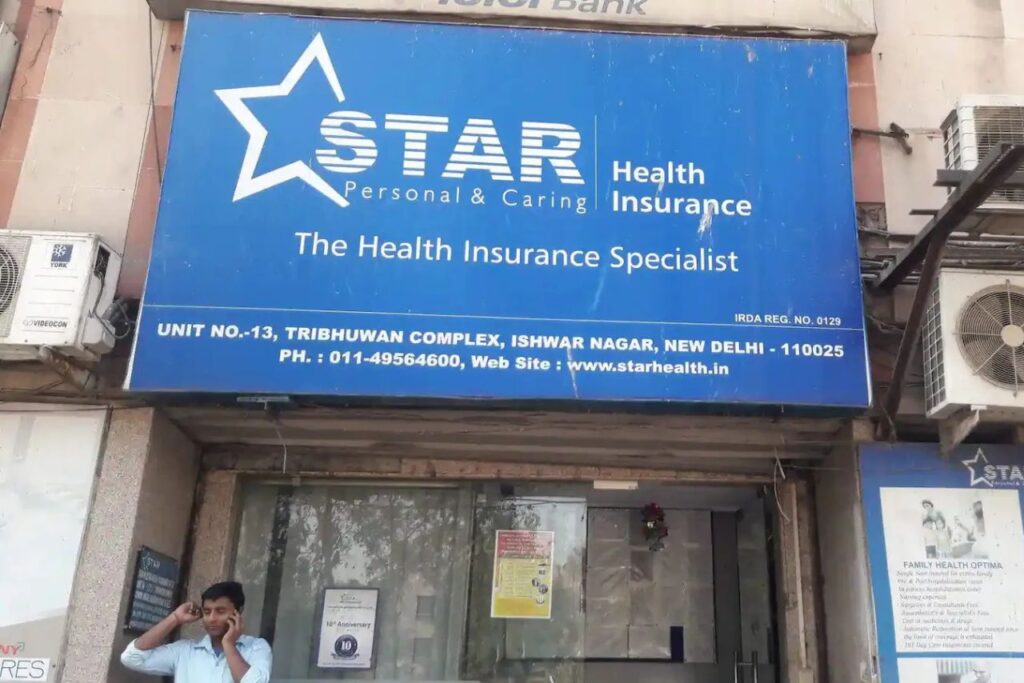
Synopsis: India’s health insurance growth is rapidly shifting beyond metros, with Tier-2 and Tier-3 cities now accounting for more than 50% of new policy sales. Rising medical costs and post-pandemic awareness are accelerating adoption across smaller towns. Star Health and Allied Insurance is now betting heavily on this trend, targeting ₹24,000 crore FY27 premium growth.
India’s health insurance growth is increasingly shifting beyond metros as Tier-2 and Tier-3 cities emerge as the biggest drivers of new policy demand. Rising medical inflation, post-pandemic awareness, and improving digital access are pushing smaller-town consumers toward higher-value health insurance plans.
Against this backdrop, this insurance company is aggressively restructuring its FY27 strategy around smaller cities, expecting nearly 65% of its targeted ₹24,000 crore premium growth to come from these markets.
With a market capitalisation of around ₹30,668 crore, the shares of Star Health and Allied Insurance are trading near ₹521 apiece in today’s market session, down 0.93% from their previous day’s close of ₹523 apiece, and the stock has given a return of 18.57% over the last year.
Star Health Is Repositioning Itself Around Smaller Cities
Star Health and Allied Insurance is aggressively aligning its FY27 growth strategy toward the Tier 2 and Tier 3 opportunity. The company is targeting nearly ₹24,000 crore in gross written premium (GWP) during FY27 and expects almost 65% of that business to come from Tier-2 and Tier-3 cities, thereby expecting a revenue of ~16,000 crores from Tier-2 and Tier-3
That is not a marginal adjustment. It effectively signals that smaller cities are now becoming the company’s core growth engine rather than an incremental expansion opportunity.
Management has already confirmed that two new affordable health insurance products, specifically designed for Tier-2 and Tier-3 consumers, will launch shortly. The strategy appears straightforward: capture first-time insurance buyers before competition intensifies further across smaller markets.
Demand Quality Is Improving Faster Than Expected
One of the most important developments inside India’s health insurance market is that smaller-city consumers are increasingly opting for higher-value health insurance plans.
The share of customers selecting ₹10–14 lakh coverage has nearly doubled over the past four years across Tier-2 and Tier-3 cities. Policies above ₹15 lakh are also seeing rising adoption.
That matters because larger-ticket health insurance plans improve premium growth visibility and increase long-term customer stickiness for insurers. It also signals growing financial maturity among middle-income households outside major urban centres. For insurers, this is particularly important because retail health insurance businesses become significantly more attractive when policy sizes expand while renewal rates remain stable.
Distribution Could Become The Biggest Competitive Advantage
Star Health’s retail-focused business model and extensive hospital network remain one of its biggest structural strengths. The company derives nearly 92% of its business from retail health insurance and operates one of India’s largest standalone health insurance ecosystems. Its distribution depth across South India and emerging urban centres gives it a significant operational advantage in markets where insurance adoption is still relationship-driven rather than entirely digital.
That becomes increasingly important as competition intensifies. Niva Bupa, Care Health Insurance, and Aditya Birla Health Insurance are all aggressively targeting the same Tier-2 and Tier-3 opportunity through affordability-focused products and digital distribution models.
However, insurance penetration in smaller cities still depends heavily on physical distribution, local trust, hospital relationships, and claims servicing capability, areas where incumbents continue to retain an edge.
The Bigger Debate Is Still Profitability
The growth opportunity is large. The profitability question remains equally important. Affordable insurance products naturally create underwriting pressure because pricing flexibility remains limited while claims volatility can stay elevated in newer geographies.
The pressure is already visible to some extent. Despite continued premium growth, Star Health’s EPS has moderated, showing that earnings expansion is not currently keeping pace with topline growth.
That creates the central investor debate for FY27: Can Star Health aggressively scale across smaller cities while maintaining underwriting discipline and protecting margins? The answer to that question may ultimately determine whether the company continues commanding premium positioning within India’s health insurance sector.
Market Takeaway
Star Health is increasingly becoming a direct listed bet on India’s next phase of health insurance penetration, one driven not by metros, but by smaller cities. The company’s ₹24,000 crore premium target and aggressive Tier-2 and Tier-3 expansion strategy suggest management believes the next decade of health insurance growth will emerge from first-time buyers outside India’s largest urban centres.
If insurance adoption across smaller cities continues compounding and Star Health successfully balances growth with underwriting discipline, the company could strengthen its market leadership significantly over the next several years. But if competition intensifies faster than expected and profitability weakens further, premium growth alone may not be enough to sustain long-term earnings momentum.
About the Company and Financials
Founded in 2006, Star Health and Allied Insurance is India’s largest standalone health insurance company, focused primarily on retail health insurance products. The company offers individual health, family floater, accident, and critical illness insurance products and operates through a wide network of agents, hospitals, and branch offices across India.
Year-on-Year analysis: Revenue from operations has increased from ₹ 16,101 crores in FY25 to ₹17,825 crores in FY26, up 10.71%, with reported operating and net profit being ₹745 crores and ₹557 crores for the same period.
Quarter on Quarter analysis: Revenue from operations has increased from ₹4,566 crores to ₹4,648 crores, up 13.89% for March Q4’FY26, with reported operating and net profit being ₹148 crores and ₹111 crores for the same period. The company reported an ROCE of 8.57% and an ROE of 6.70%, and the company has a debt-to-equity ratio of 0.05.
Disclaimer: The views and investment tips expressed by investment experts/broking houses/rating agencies on tradebrains.in are their own, and not that of the website or its management. Investing in equities poses a risk of financial losses. Investors must therefore exercise due caution while investing or trading in stocks. Trade Brains Technologies Private Limited or the author are not liable for any losses caused as a result of the decision based on this article. Please consult your investment advisor before investing.
The post Star Health Stock: Why Small Cities Are Becoming Its Biggest Opportunity? appeared first on Trade Brains.
Related Articles
Stocks to Watch: Asian Paints, RVNL and 8 Other Stocks Announcing Results Next Week
Synopsis: Earnings season gathers momentum this week, with key results likely to...

Stocks to Buy: 5 Stocks That Can Deliver Up to 104% Upside
Synopsis: The share of this brokerage-picked stocks pack shows strong upside pot...

PI Industries: Can New Molecules Drive Growth Despite Agrochemical Weakness?
Synopsis: PI Industries Ltd is in focus after Jefferies initiated coverage with...

5 Times the Wrong Stocks Rallied and Shocked the Market
Mistaken Identity: How Name Mix-Ups and Buzzwords Send Unrelated Stocks to the M...