Stock to Buy: Pure Luxury Hotel Stock with Explosive Profit Growth
Alex Smith
3 hours ago
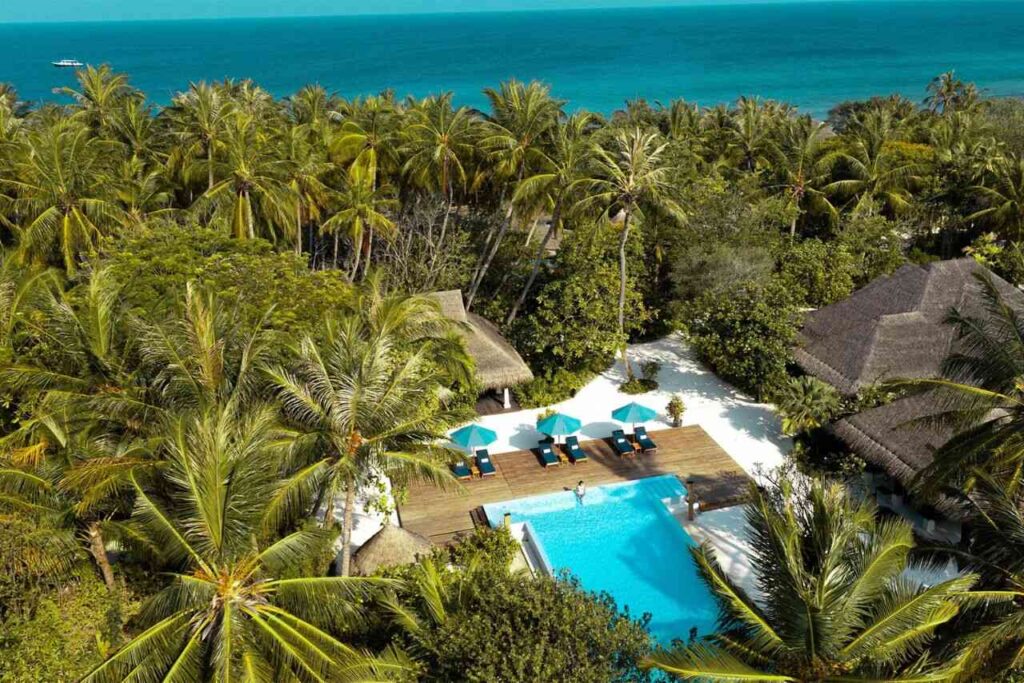
Synopsis: Ventive Hospitality is growing fast with strong profits, premium assets, and a Maldives-led luxury business. While its annuity segment adds stability, future growth depends on hotel expansion and execution. The company offers a strong growth story, but rising cyclicality and concentration risks mean investors should watch sustainability carefully.
Ventive Hospitality is no longer a simple Pune hotel story. Over a short period, it has turned itself into a much larger luxury-focused hospitality platform with hotels in India and the Maldives, a stable annuity business in Pune, and a visible pipeline that now stretches into Goa, Delhi, Varanasi, Sri Lanka and Navi Mumbai.
The reason the company is drawing attention is not just that revenue and profit have grown sharply, but that the mix of assets is unusual. It combines high-end city hotels, ultra-luxury island resorts, premium food and beverage offerings, office and retail rentals, and now even a membership-led lifestyle hospitality platform through Soho House.
At the same time, this is also a story where investors need to separate what is genuinely strong from what is still dependent on execution. The company has reported strong growth across Q2 and Q3 FY26, with consolidated revenue in Q2 rising 28 percent year-on-year and EBITDA rising 50 percent, while Q3 consolidated revenue rose 27 percent and PAT grew more than 300 percent year-on-year.
For the first nine months of FY26, consolidated revenue stood at Rs. 1,796.4 crore, EBITDA at Rs. 822.6 crore and EBITDA margin at 46 percent. These numbers look strong, but the real question is whether the company can keep growing steadily over time or if this growth is mainly because it is coming from a low base and benefiting from a good phase in the cycle.
A Luxury Platform Built Around Pune, Maldives and Premium Brands
Ventive Hospitality today describes itself as India’s largest luxury-focused hospitality platform, with 13 hotels across three countries, 2,178 keys, around 80 percent luxury focus, and 3.4 million square feet of annuity assets with 98 percent committed occupancy. Its operational hotel portfolio includes marquee city assets such as JW Marriott Pune, The Ritz-Carlton Pune, Marriott Suites Pune, Courtyard by Marriott Hinjewadi, DoubleTree by Hilton Pune, Marriott Aloft ORR and Whitefield in Bengaluru, Hilton Goa Resort, and the Maldives resorts Anantara, Conrad and Raaya by Atmosphere.
It also has Soho House Mumbai in the portfolio and a visible development pipeline that includes Varanasi Marriott, Courtyard by Marriott Mundra, Ritz-Carlton Reserve Pottuvil in Sri Lanka, Moxy hotels in Pune and Navi Mumbai, and JW Marriott Navi Mumbai.
The company’s structure matters because this is not a standard hotel owner. As of FY25, hospitality contributed 77 percent of total revenue and annuity contributed 23 percent. Within hospitality, international operations accounted for 54 percent of the business and India operations 46 percent. That means Ventive is still fundamentally a hotel company, but its cash flow profile is supported by a very profitable rental portfolio.
Motilal Oswal noted that the annuity assets contribute only around 23% of total revenue but roughly 45 percent to 50 percent of EBITDA because of their very high margins. This is one reason the company’s consolidated profitability looks stronger than a plain hotel comparison might suggest.
Why Pune Still Matters More Than Most Investors Realise
The center of gravity is still Pune. Motilal noted that about 54 percent of total room inventory is located in Pune, where Ventive owns the largest luxury hotel, JW Marriott Pune, and one of only two Ritz-Carlton hotels in India. Motilal has repeatedly argued that Pune remains a structurally attractive market because of limited luxury supply, improving road and airport connectivity, office absorption, IT-led growth and strong corporate demand.
In Q2, management said Pune continued to validate its thesis as limited new supply and strong corporate demand created room to grow both ADR and occupancy. In Q3, it repeated that the absence of new luxury hotel supply and continued infrastructure improvement gave it headroom to sustain ADR growth.
This is important because the company’s India story is driven more by pricing than by volume. In Q2, India ADR rose 12 percent to Rs. 11,335, with occupancy at 66 percent, RevPAR at Rs. 7,486 and India TRevPAR at Rs. 13,630. In Q3, India ADR rose 17 percent to above Rs. 13,000, occupancy remained around 62 percent, RevPAR was around Rs. 8,300 and TRevPAR around Rs. 16,000.
Management said it has been phasing out low-yielding corporate accounts and reallocating inventory toward better-margin segments, direct bookings and stronger accounts. That tells you this is not a broad-based mass-market growth model. It is a yield optimization model built around premium assets.
The other differentiator is food and beverage. Ventive has more than 70 market-leading F&B offerings and several award-winning restaurants. Management has highlighted that F&B and banqueting revenue rose 17 percent in Q2, and in Q3 it said better use of existing outlets, event programming and monetisation during shoulder periods helped support TRevPAR growth. This matters because premium hotels often create more value through dining, banquets, weddings and experiences than through rooms alone.
Maldives Is the Flashiest Part of the Story and Also the Profit Engine
If Pune is the domestic anchor, the Maldives is what gives the story its glamour and much of its operating punch. Motilal highlighted that international keys accounted for only 25 percent of hospitality inventory in FY25 but 54 percent of hospitality revenue, with 515 keys across Anantara, Conrad and Raaya. In other words, a smaller part of the portfolio generates a disproportionate share of the top line.
Management’s Q2 and Q3 commentary also shows how sharply the Maldives business is scaling. In Q2, international hospitality revenue rose 40 percent year-on-year, same-store revenue growth was 9 percent, same-store occupancy improved 4 points to 50 percent, and EBITDA rose 164 percent year-on-year. Management said this was supported by operational recovery at Conrad and Anantara, better source-market diversification, cluster purchasing, manpower optimisation and targeted marketing.
In Q3, as the Maldives entered its stronger season, revenue rose 46 percent year-on-year to Rs. 326.4 crore, EBITDA rose 73 percent to Rs. 127.5 crore, and EBITDA margin expanded to 39 percent. Same-store occupancy improved to 65 percent and overall occupancy reached 71 percent, helped by Raaya hitting 84 percent occupancy. Same-store TRevPAR rose 17 percent to around Rs. 82,000.
The international portfolio gives Ventive exposure to ultra-luxury experiential travel, much higher room economics and strong operating leverage. But investors should also remember that this part of the business is more sensitive to travel cycles, global demand and external shocks than a plain city hotel business. Right now, the filings show it is a major strength. Over a weaker cycle, it could also become a more volatile earnings driver.
The Stability Layer Beneath the Growth Story
One reason Ventive’s overall profile looks stronger than a pure hotel stock is the annuity business. The company has 3.4 million square feet of office and retail assets in Pune with 98 percent committed occupancy. In Q2, management said the annuity business remained a solid bedrock with EBITDA margins of 90 percent. In Q3, nine-month annuity revenue was up 5 percent year-on-year, EBITDA up 4 percent, rent (INR psf/m) was Rs. 120, and committed occupancy stood at 98 percent. Motilal also highlighted that these assets command a rental premium and benefit from synergies with the company’s hospitality assets.
The annuity business is not the growth engine, but it stabilises cash flows, supports debt servicing and lifts consolidated EBITDA quality. The issue, however, is that future capital is increasingly being deployed toward hotels and lifestyle hospitality rather than annuity. That means the business may become more cyclical over time even if it grows faster.
Expansion Is Real, Visible and Getting More Aggressive
In Q2, management announced the Hilton Goa acquisition, which gave it a 76 percent stake in a 104-key resort in Goa with plans for refurbishment, more keys, a new F&B outlet, spa and high-end villas. It also announced a proposed investment in Soho House India, including Soho House Juhu and Soho House New Delhi. Since then, the company has completed the acquisition of Finest-VN Business Park for Rs. 59.83 crore, giving it control of the entity that, through subsidiaries, holds exclusive rights for Soho House expansion in India and operates Soho House Mumbai. It has also approved the acquisition of a 50.02 percent stake in Narmada Estates, which owns land near The Ritz-Carlton Pune, and 100 percent stake in Sol De Goa, which strengthens the company’s leisure hospitality portfolio in Goa.
This makes the company’s direction very clear. It is not reducing annuity. It is simply growing hotels, resorts and lifestyle hospitality much faster. That can create a bigger growth runway, but it also raises the importance of execution, funding discipline and demand durability.
Should You Buy?
Ventive has several things going for it. It owns premium assets, has real pricing power in Pune, strong operating leverage in the Maldives, a profitable annuity cushion, and a visible pipeline across India and Sri Lanka. Its Q2 and Q3 results show that both revenue and profit momentum are strong, debt costs are falling, and net debt to EBITDA has improved to about 1.4x by the end of December 2025. Management has also shown a willingness to expand into adjacent premium segments rather than chase volume for its own sake.
But this is not a no-risk story. The company still depends heavily on Pune, the Maldives is a major earnings driver, and the growth plan is becoming more hotel-heavy and more execution-dependent. The annuity business gives support today, but future growth is clearly being driven by hospitality. So the real investment case is not about whether Ventive is a safe rental-backed business. It is about whether investors believe this premium hospitality platform can keep compounding through better pricing, disciplined acquisitions, and successful new launches without losing capital discipline.
Based only on the data from the company and report from Motilal Oswal, Ventive looks like a strong growth story with genuine strategic logic behind it. Motilal has given a “BUY” rating with a target price of Rs. 1,000 which implies an upside of approximately 60 percent.
Disclaimer: The views and investment tips expressed by investment experts/broking houses/rating agencies on tradebrains.in are their own, and not that of the website or its management. Investing in equities poses a risk of financial losses. Investors must therefore exercise due caution while investing or trading in stocks. Trade Brains Technologies Private Limited or the author are not liable for any losses caused as a result of the decision based on this article. Please consult your investment advisor before investing.
The post Stock to Buy: Pure Luxury Hotel Stock with Explosive Profit Growth appeared first on Trade Brains.
Related Articles

5 hemical stocks where FIIs raised stake up to 3.37% in Q4; Do you hold any?
Synopsis: Foreign Institutional Investors increased stakes in select chemical st...

CEAT Q4 FY26 Results: What to Expect from the Tyre Stock?
Synopsis: CEAT will host its Q4FY26 earnings call on April 29 to discuss its ann...
Aye Finance Shares Jump 9% As Q4 Profit More Than Doubles to ₹86 Cr YoY
Synopsis: Aye Finance Limited has delivered a blockbuster performance for the fo...

Trade Brains Smallcase Picks: 5 Fertilizer and chemical stocks to keep on your radar
Synopsis: India’s chemicals and fertilizers sector shows strong growth potential...