The $109,000 TFSA Benchmark: Here’s How to See Where You Stand
Alex Smith
2 hours ago
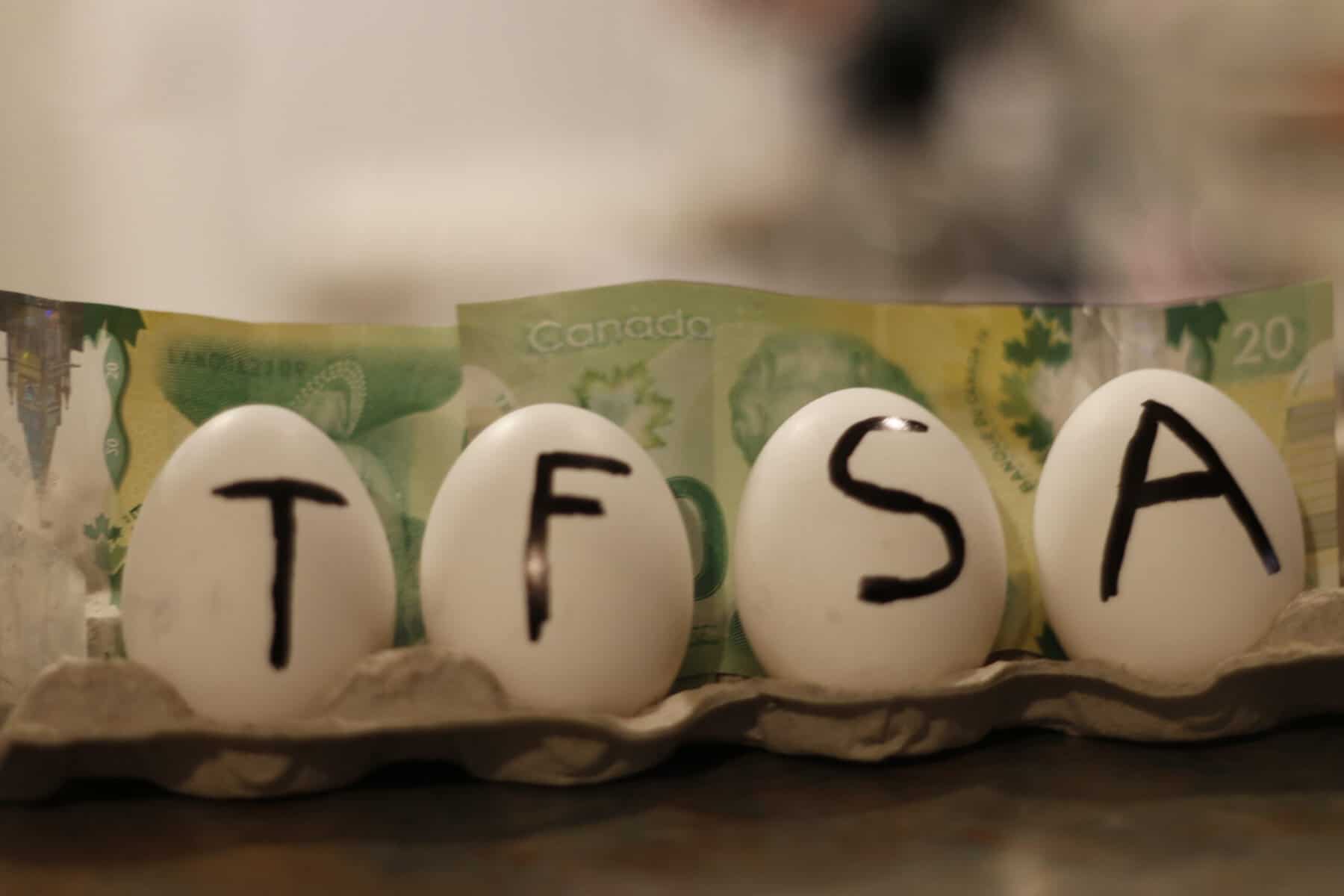
Any Canadian who was 18 and above in 2009 has a cumulative Tax-Free Savings Account (TFSA) contribution room of $109,000. Yet, Canadians use only 23â55% of this benchmark, according to data from Statistics Canada. Looking at the working age group, those in the 30-40 age group use 23%, and those in the 60â65 age group use 55% of their TFSA benchmark. Only those who have retired are using their TFSA optimally at 70â80%. It is probably because the Registered Retirement Savings Plan (RRSP) ends at age 70.
Age Group (2024 tax Year)Avg Fair Market Value (FMV)Cumulative Contribution (CC)FMV/ CC25â29$13,967$48,50029%30â34$18,475$80,00023%35â39$21,561$95,00023%40â44$24,061$95,00025%45â49$28,084$95,00030%50â54$35,235$95,00037%55â59$43,519$95,00046%60â65$52,381$95,00055%65â69$59,344$95,00062%70â74$64,972$95,00068%75â79$71,094$95,00075%80 and above$76,305$95,00080%Since the TFSA data in the table above is for 2024, the benchmark was $95,000.
Here’s how to see where you stand among the TFSA benchmark
Look at your age group and see how much of the TFSA benchmark you have used. Do not look at the average TFSA balance, as the data is two years old. If you are 46 years old and have used 30% of your TFSA contribution room ($32,700) in 2026, you have at least achieved the average. The average itself is weak, which means your TFSA investments are not enough. Those who want to retire at age 46 should already be investing like retirees.
Seventy-year-olds are using up 68â70% of their TFSA contribution room. To retire at 46, you should at least use 70% of your TFSA benchmark. When you are ahead in your investing game, financial goals come closer.
How to catch up on the $109,000 TFSA benchmark
Make investing a habit
The $109,000 figure is tough to catch up on. Firstly, you can ensure that you max out on future TFSA contributions. For 2026, the contribution limit is $7,000. Consider breaking it down to $500 per month. Making investing a habit is how you can get things done. The remaining $1,000 can be invested in any month where you get your annual bonus. Even if you do not invest that $1,000, you used 86% ($6,000) of your contribution limit.
Build a core portfolio
Next, donât just keep the money idle in a TFSA. Prepare a core portfolio, which comprises two to four evergreen stocks that you keep accumulating throughout the year.
The iShares NASDAQ 100 Index ETF (CAD-Hedged) (TSX:XQQ) and SmartCentres REIT (TSX:SRU.UN) could be a part of your core portfolio for 2026. The XQQ ETF can give you exposure to the top-performing global tech stocks trading on Nasdaq. Your core portfolio will benefit from all types of tech revolutions, be it artificial intelligence (AI), 5G, autonomous cars, robotics, and someday space travel.
The ETF adjusts and rebalances its portfolio every quarter. The poor performers exit, and the top performers stay. The ETF has surged 26% from the March 30, 2026, dip. It has doubled investorsâ money in five years, riding the AI wave.
SmartCentres REIT is a stock to accumulate for its 6.5% yield. It is Canadaâs largest retail REIT and has properties at the city intersection. The REIT has taken up an ambitious project to convert its open-air shopping centres to city centres comprising commercial, residential, retail, and storage facilities all in one place. While SmartCentres develops and sells residential properties, it leases commercial properties. Until now, SmartCentres has used its main tenant, Walmart, as the anchor to keep the occupancy rate high. It will use the intensification approach to optimally use the free space and attract higher rent.
Final thoughts
Most Canadians delay investing because they donât know where to invest. When you know your core portfolio, meeting the TFSA benchmark doesnât take much time or eat up on your budget.
The post The $109,000 TFSA Benchmark: Here’s How to See Where You Stand appeared first on The Motley Fool Canada.
Should you invest $1,000 in iShares Nasdaq 100 Index ETF (CAD-Hedged) right now?
Before you buy stock in iShares Nasdaq 100 Index ETF (CAD-Hedged), consider this:
The Motley Fool Canada team has identified what they believe are the top 10 TSX stocks for 2026⦠and iShares Nasdaq 100 Index ETF (CAD-Hedged) wasnât one of them. The 10 stocks that made the cut could potentially produce monster returns in the coming years.
Consider MercadoLibre, which we first recommended on January 8, 2014 … if you invested $1,000 in the âeBay of Latin Americaâ at the time of our recommendation, youâd have over $18,000!*
Now, it’s worth noting Stock Advisor Canada’s total average return is 94%* – a market-crushing outperformance compared to 85%* for the S&P/TSX Composite Index. Don’t miss out on our top 10 stocks, available when you join our mailing list!
Get the 10 stocks instantly #start_btn6 { background: #0e6d04 none repeat scroll 0 0; color: #fff; font-size: 1.2em; font-family: 'Montserrat', sans-serif; font-weight: 600; height: auto; line-height: 1.2em; margin: 30px 0; max-width: 350px; text-align: center; width: auto; box-shadow: 0 1px 0 rgba(0, 0, 0, 0.5), 0 1px 0 #fff inset, 0 0 2px rgba(0, 0, 0, 0.2); border-radius: 5px; } #start_btn6 a { color: #fff; display: block; padding: 20px; padding-right:1em; padding-left:1em; } #start_btn6 a:hover { background: #FFE300 none repeat scroll 0 0; color: #000; } @media (max-width: 480px) { div#start_btn6 { font-size:1.1em; max-width: 320px;} } margin_bottom_5 { margin-bottom:5px; } margin_top_10 { margin-top:10px; }* Returns as of April 20th, 2026
More reading
- 2 Safer High-Yield Dividend Stocks for Canadian Retirees
- 3 Dividend Stocks That Could Keep Paying Through Market Chaos
- 2 High-Yield Dividend Stocks That Could Be Safer Picks for Canadian Retirees
- 3 Canadian Dividend Stocks Yielding Up to 6.5% Worth Owning When Growth Falls Out of Favour
- A 6.5% TFSA Pick That Pays Consistent Cash
Fool contributor Puja Tayal has no position in any of the stocks mentioned. The Motley Fool recommends SmartCentres Real Estate Investment Trust and Walmart. The Motley Fool has a disclosure policy.
Related Articles
2 Canadian Stocks I’d Buy Before the Market Changes Again
Markets are whipping around, so these two Canadian stocks aim to deliver steadie...

A 5.3% Yield Pipeline Stock That Could Have a Breakout Year
Enbridge (TSX:ENB) might be one of the best deals in the high-yield scene after...

Undervalued Canadian Stocks to Buy Now
Value investors can realize enormous gains in the near term by buying quality bu...

The Best Sustainable Stocks for Passive Income in 2026
Fortis Inc (TSX:FTS) is a very sustainable stock. The post The Best Sustainable...