The Great 2026 Altcoin Reset: 3 Revenue-Generating Tokens to Buy While the Market Cleans House
Alex Smith
2 hours ago
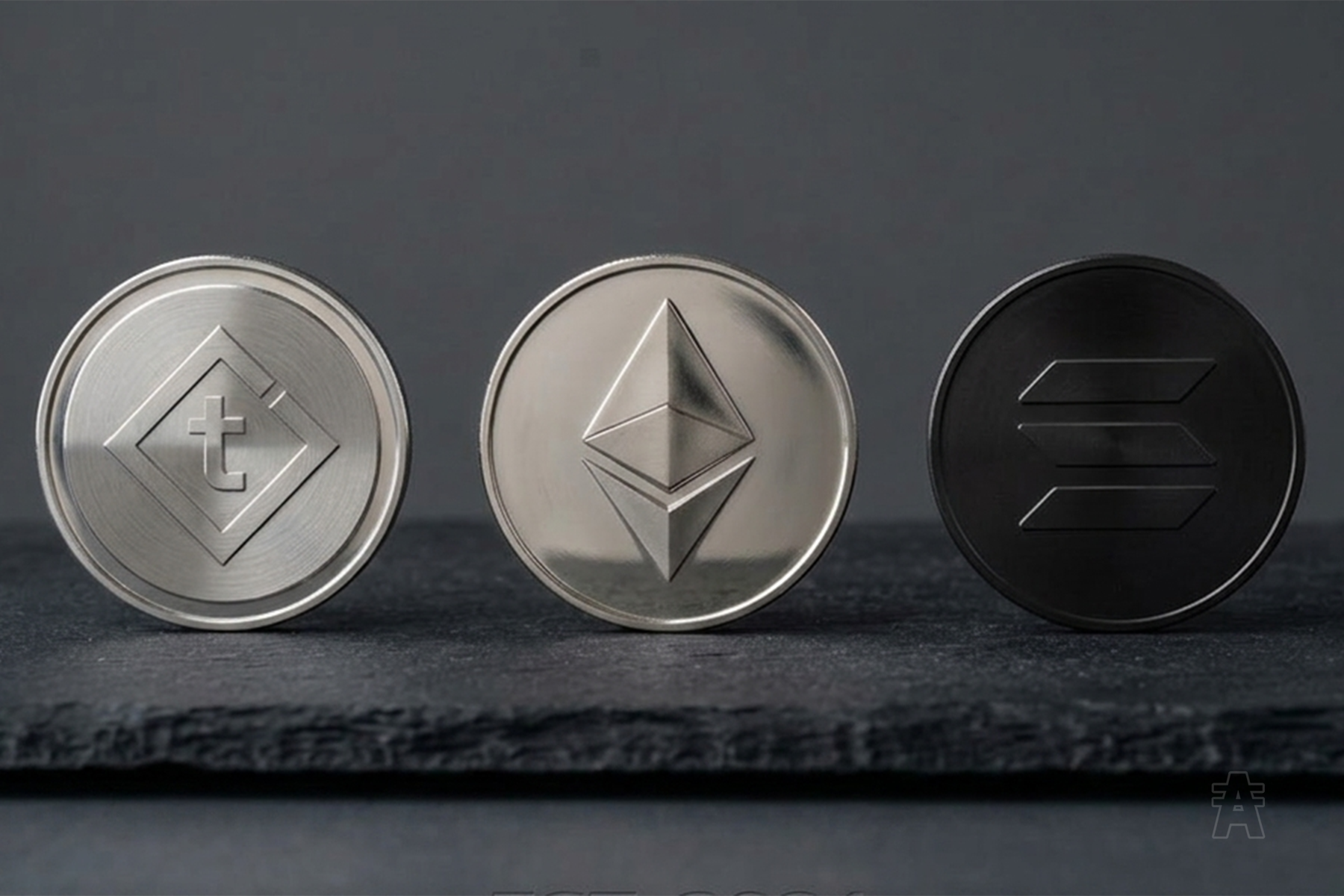
The mid-2026 crypto market is undergoing a sharp but necessary reset, creating what many investors see as a compelling long-term buying opportunity. As leading Layer-1 networks like Ethereum and Solana trade at discounts of roughly 45% from their local highs, market attention is gradually shifting away from purely narrative-driven speculation and toward projects with sustainable utility, growing network activity, and meaningful revenue generation.
Rather than chasing hype alone, institutional investors and experienced market participants are increasingly focusing on altcoins with proven fee-generating ecosystems, staking incentives, and real-world adoption.
Why the 2026 Sell-off is Different
Unlike previous market cycles driven primarily by abundant liquidity, today's environment is shaped by stronger fundamentals and greater institutional participation.
Several long-term trends continue to reshape the crypto landscape:
- Real-World Asset (RWA) tokenization has surpassed $30 billion in mid-2026.
- Institutional capital continues to enter regulated blockchain infrastructure.
- Persistent macroeconomic pressures are increasing investor demand for projects with sustainable business models and recurring network revenue.
In this environment, networks capable of generating consistent economic activity may be better positioned than projects relying primarily on speculative momentum.
3 Undervalued Altcoins to Accumulate Now
Token Sector Key Catalyst 2026 Risk Level Ethereum (ETH) Institutional L1 DTCC Tokenization Pilot Low Solana (SOL) High-Throughput L1 Alpenglow 150ms Finality Upgrade Medium Bittensor (TAO) Decentralized AI Autonomous Agentic Commerce High1. Ethereum (ETH) — The Institutional Settlement Layer
Despite the recent market correction, Ethereum continues to stand out as one of the strongest long-term infrastructure plays in crypto.
- The Thesis: More than 30% of ETH remains locked in staking, reducing the liquid supply while allowing participants to earn staking rewards secured by network activity.
- The Trigger: The Depository Trust & Clearing Corporation (DTCC) is advancing tokenized securities initiatives alongside firms including BlackRock and Goldman Sachs, reinforcing Ethereum's position as a leading settlement layer for tokenized assets.
2. Solana (SOL) — The Engine of High-Frequency Trading
Solana has established itself as one of the leading ecosystems for consumer applications, payments, decentralized trading, and high-throughput financial infrastructure.
- The Thesis: Strong network usage continues to generate significant fee revenue while the token trades well below recent highs.
- The Trigger: The upcoming Alpenglow upgrade aims to reduce block finality to approximately 150 milliseconds, potentially making Solana one of the fastest execution layers for institutional finance, payments, and retail commerce.
3. Bittensor (TAO) — Infrastructure for Decentralized AI
As artificial intelligence becomes increasingly integrated into blockchain applications, decentralized compute networks may play an expanding role in supporting AI-driven services.
- The Thesis: Bittensor provides economic incentives for decentralized machine-learning infrastructure while its fixed supply of 21 million tokens creates long-term scarcity dynamics similar to Bitcoin.
- The Trigger: Growing adoption of autonomous AI agents and decentralized AI applications could increase demand for the network's computing and incentive layer over time.
The Bottom Line: Focus on Sustainable Fundamentals
The current market increasingly rewards projects with active ecosystems, meaningful fee generation, and expanding real-world adoption. While speculative rallies will continue to occur, investors may benefit from prioritizing blockchain networks with durable infrastructure, growing developer activity, and sustainable economic models rather than relying solely on market narratives.
Related Articles
BTC's Four-Year Cycle Suggests $76K as Bitcoin Proves Resilient
Bitcoin's cycle suggests potential for major growth.

Fxsi After 6 Months: Better Than Other Platforms?
Choosing a trading platform is easy for the first week. The real test comes afte...

Crypto Venture Capital Is Returning — But Not Where Most Investors Expect
Venture capital is returning to crypto, but now it’s focused on infrastructure,...

Tokenization Is Quietly Becoming Bigger Than DeFi
Tokenization is emerging as one of the fastest-growing trends in crypto, as inst...