Utkarsh Small Finance Bank: How This Bank Stock Became FIIs’ and DIIs’ Favorite?
Alex Smith
4 hours ago
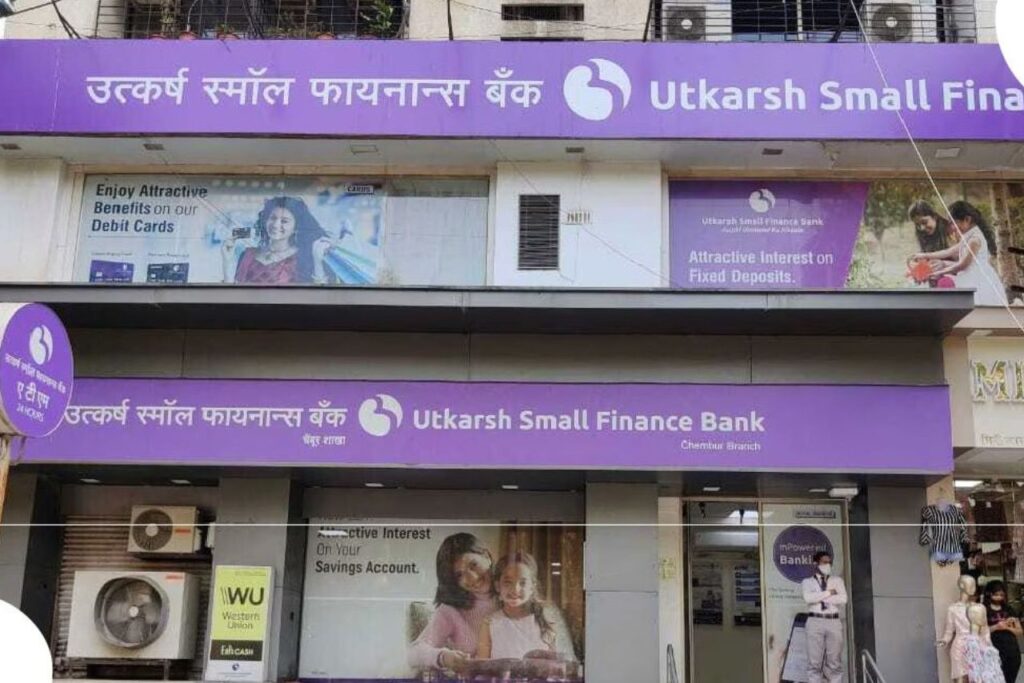
Synopsis: Utkarsh swung from record profits to deep losses, yet FIIs and DIIs piled in. A microfinance crash, sharp clean-up, safer loan mix, and visible recovery explain why institutions are betting early.
During FY24, Utkarsh Small Finance Bank achieved the best financial year ever in its entire history, a record-breaking net profit of Rs 498 crore, a very good return on equity, a clean asset quality, and a stock that got investors excited about the microfinance growth story in India. Jump to just six quarters later, Q3 FY26, and the same bank reported a net loss of Rs 375 crore in a single quarter, thus revealing a drastic fall in profitability.
However, here is the twist: this is exactly when institutional investors decided to invest big time. FIIs increased their stake by 10.12%, whereas DIIs increased their stake by 7.35%. Combined, some of the most analytically rigorous minds on the planet, having looked at a bank that posted the worst quarterly loss in its history, thought of buying the shares aggressively. So, to make sense of this choice, we first need to get to know the bank’s story.
Microfinance crisis
Before judging Utkarsh, it is critical to understand the broader industry shock. India’s microfinance sector went through one of its sharpest credit downturns between 2024 and 2026. Microfinance institutions lend collateral-free to low-income households, primarily women, through Joint Liability Groups (JLGs), where peer pressure and group discipline historically delivered recovery rates of 98–99%. That model broke down during this cycle. What was once a strength, rapid, unsecured group lending, turned into a source of systemic fragility when borrower leverage and political interference rose simultaneously.
Microfinance institutions give collateral-free loans to low-income households with annual incomes of less than Rs 3 lakh. Women are the primary beneficiaries of such loans. The lenders used to form joint liability groups (JLG) of women that used to act as intangible collateral for such otherwise unsecured lending. The JLG model, which was once at the heart of microfinance’s unavoidable 98-99% recovery rate, no longer worked, which became the nightmare for this crisis.
JLG stands for Joint Liability Group Loan, a microfinance product designed for groups of 10-30 women to receive business capital without collateral The numbers at the industry level are startling. India’s total microfinance gross loan portfolio stood at Rs 4.33 lakh crore in FY24, and by FY25, it had shrunk to Rs 3.81 lakh crore, which is a decline of 12% in a single year. By Q2 FY26, it had contracted further to Rs 3.39 lakh crore, completing six consecutive quarters of portfolio decline.
Gross NPAs across the sector surged from 8.8% in 2024 to 16% by March 2025, nearly doubling in just twelve months. New loan originations collapsed as in Q3 FY25 alone, disbursements fell 41.7% year-on-year in volume. Roughly 50 lakh borrowers were pushed out of the formal credit system entirely as lenders stopped lending and recoveries turned ugly.
The crisis unfolded due to three overlapping forces. First, borrower overleveraging quietly reached unsustainable levels. Many households were simultaneously borrowing from two, three, or even four lenders under the same JLG framework. Competitive pressure for growth meant that cross-lender exposure checks were often inadequate, allowing aggregate indebtedness to build up beneath the surface.
Second, the industry faced a sudden regulatory reset. MFIN’s Guardrail 2.0 imposed strict borrower-level caps on total indebtedness and limited the number of active MFI lenders per borrower. While structurally sound, the abrupt implementation disrupted repayment behaviour, as borrowers adjusted to tighter credit availability and changed repayment incentives.
The third trigger was political interference in key microfinance states. In politically sensitive regions such as Uttar Pradesh and Bihar, local loan waiver narratives and so-called Karja Mukti movements weakened repayment discipline. In several pockets, collection efficiency fell sharply below historical norms, pushing state-level averages below 90% in FY24. For a lending model built entirely on group discipline, even a 10% collection shortfall is destabilising, leading to rapid slippage and loss recognition.
Also, collection rates in states like Uttar Pradesh and Bihar fell below 90% in FY24, due to borrower fatigue, multiple loans, and expectations of loan waivers. For a lending model built entirely on group repayment discipline, a 10% collection shortfall is catastrophic. Additionally, it is also to be noted that MFIs have traditionally followed a cyclical pattern, with crises occurring every 3-5 years.
Geography As Destiny: Why UP and Bihar Broke Utkarsh
Utkarsh entered this downturn with a structural geographic concentration that amplified the impact of the industry crisis. As of FY26, the bank operated 1,105 branches across 27 states and union territories. However, approximately 55% of these branches were concentrated in just three states, namely Uttar Pradesh, Bihar, and Jharkhand.
More importantly, a substantial portion of the microfinance loan book originated from Uttar Pradesh and Bihar, two of the most severely affected states during the downturn. This concentration meant that stress at the state level translated directly into stress on Utkarsh’s balance sheet.
UP and Bihar together account for nearly 46% of the branch count alone. And more critically, over 70% of the microfinance loan book, which was 90% of the total book as recently as FY20, originated from these two geographies. When UP and Bihar go bad, Utkarsh goes bad.
And both states went very bad, very fast. Overleveraged borrowers as a share of the active portfolio stood at 8.7% in Bihar and 6.6% in UP, among the worst in the country. Collection rates in these states deteriorated faster and deeper than peer states like Tamil Nadu, Karnataka, or Maharashtra, where banks like Ujjivan and Equitas had significantly more diversified exposure.
The numbers that management disclosed on the Q3 FY26 earnings call tell the story in brutal detail. The MB JLG 1-to-90 DPD pool, which captures every borrower between one day and ninety days overdue, stood at approximately Rs 378 crore in October 2025. That is almost Rs 400 crore of early-stage stress building up in just one month.
By January 2026, that same pool had fallen to below Rs 50 crore. The 1-to-30 DPD pool, which represents the freshest stress, went from Rs 170 crore in October to below Rs 50 crore in January. MD Govind Singh on the call used the words “near normal”, and given that in normal operations, a Rs 50 crore 1-to-30 pool is manageable through daily collection operations.
October 2025 proved to be the most disruptive month of the entire cycle for Utkarsh. Multiple major festivals fell in quick succession, disrupting the weekly and fortnightly centre meetings that underpin JLG collections. This coincided with heightened political noise in Uttar Pradesh and Bihar and confusion around the Guardrail 2.0 transition. The result was a temporary seizure in collections, which disproportionately impacted Q3 FY26 profitability. From November onwards, however, the collection trajectory improved sharply as operational normalcy returned.
Compared to peers such as Ujjivan Small Finance Bank and Equitas Small Finance Bank, Utkarsh was slower in implementing ground-level corrective measures in its most stressed districts. More geographically diversified peers were quicker to expand collection manpower, tighten bureau checks, and temporarily slow disbursements in high-risk branches. Utkarsh’s management later acknowledged that delayed response in certain Uttar Pradesh districts contributed to a deeper near-term impact, even as corrective actions have since taken hold.
Utkarsh’s own management admitted that it was slower to respond in its most stressed districts, particularly in UP. Slippages declined from Rs 426 crore in the previous quarter to Rs 272 crore in Q3 FY26. Even as peers showed sequential improvement in slippage data, Utkarsh was still absorbing the momentum of its October shock.
Advances
Let us now go segment by segment through every corner of Utkarsh’s loan book as it stands in December 2025, because the headline NPA number hides as much as it reveals.
Total gross loan book: Gross Loan Portfolio stands at Rs 18,306 crore, which declined by 3.9 percent YoY in Q3 FY26. Of this secured lending made up 50% of book, up from 41% just a year earlier and from just 8% in FY20. Total JLG exposure was 33% of book (approximately 35% including Business Correspondent-sourced JLG), down from 90% in FY20. Five years ago, Utkarsh was a microfinance lender with a banking licence, but today, it is a diversified bank with a shrinking microfinance legacy problem.
Starting with the JLG book. The outstanding JLG portfolio stood at approximately Rs 6,046 crore as of Q3 FY26. This declined by 35% year-on-year and 16% in the December quarter alone, a deliberate, aggressive contraction. The gross NPA within JLG is where most of the pain is. Provision coverage on the JLG book stood at 68.5% as of December 2025.
Utkarsh follows a conservative provisioning framework. Once an account turns non-performing, the bank provides at levels higher than the regulatory minimum and writes off loans entirely after 365 days in NPA status. This approach has amplified reported losses during the downturn but has also accelerated the clean-up of legacy stress on the balance sheet, improving the quality of the surviving portfolio.
Within the JLG book, borrower over-leveraging remains the single biggest risk driver. Management earlier disclosed that borrowers with exposure to more than three lenders accounted for 16.3% of the microfinance portfolio, while the highest-risk cohort, borrowers with four or more additional lenders, represents around 6% of the book, with over 60% of this segment already slipping into NPA.
This data underscores both the severity of past over-lending and the ongoing clean-up underway under the Guardrail framework the MBBL, Micro Business Banking Loan, is the most important product in Utkarsh’s future. These are individual credit-assessed loans given to borrowers who have graduated from the JLG model, people with proven repayment track records over multiple loan cycles who have crossed the income threshold to qualify for individual assessment.
MBBL grew 80% year-on-year and 38% quarter-on-quarter in Q3 FY26, and now represents 19% of the total micro banking loan book. MBBL offers higher yields than traditional JLG loans, while maintaining better asset quality, though management did not disclose a specific disbursement yield. By contrast, Micro LAP disbursement yields are around 18%. Additionally, MBBL penetration among eligible borrowers is currently below 10%; management believes MBBL has substantial headroom for multi-year expansion.
MSME loans: MSME loans stand at Rs 4,275 crore as of December 2025, up 24% year-on-year. The bank has launched Micro LAP, small loans against property in the sweet spot of Rs 8–10 lakh, as the core MSME growth driver going forward, with disbursement yields around 18%. Separately, the Business Banking Group portfolio, which is 100% secured against immovable collateral, grew 22% year-on-year. This is high-quality institutional MSME lending with zero PAR on the current book.
Housing loans: Housing loans stand at Rs 965 crore as of December 2025, up 13% year-on-year, with disbursements of Rs 78 crore in Q3 FY26 (down from Rs 102 crore a year ago, as the bank prioritised quality over volume). The bank’s housing portfolio is focused on smaller-ticket loans outside large metros, with management highlighting steady growth and improving yields, though it has not disclosed a detailed split by city tier or ticket-size bands.
Commercial Vehicles and Construction Equipment: CE & CV currently stands at Rs 1,102 crore as of December 2025, contracted 3% year-on-year. This is the second problem book after JLG CV, and CE GNPA stood at 12.2% as of December 2025.
The bank has moderated growth in the CV/CE segment while recalibrating risk, and has strategically pivoted toward used vehicles, which now account for around 40% of disbursements, up sharply from less than 10% a year ago. Management indicated that this shift toward more resilient asset classes has helped optimise yields, while credit costs in the segment are expected to normalise as legacy stress runs off and newer vintages perform better
Deposits
Total deposits grew by 4.5% year-on-year, but the internal mix has been transformed. Institutional bulk deposits, expensive, volatile, and unreliable, were deliberately repaid to the tune of over Rs 2,000 crore and not renewed. In their place, retail term deposits grew 24% year-on-year, and CASA deposits grew 16% year-on-year and 3% quarter-on-quarter, pushing the CASA ratio to approximately 22%.
The CASA-plus-retail-term-deposit ratio improved from 70% in December 2024 to 82% in December 2025, a 1200 bps improvement in deposit quality in twelve months. The bank ended Q3 FY26 with surplus liquidity of approximately Rs 4,700 crore and an LCR of 207%, which is why the CD ratio fell from 92% a year ago to just 79% today. Cost of funds declined 20 basis points quarter-on-quarter from 8.3% in Q2 FY26 to 8.1% in Q3 FY26, and further reduction is expected as retail fixed deposits reprice at lower rates.
Capital Adequacy Ratio (CAR): CAR currently stands at 20.1%, Tier-1 at 17.1%, and the book net worth is approximately Rs 3,000 crore. The Rs 950 crore rights issue completed in November 2025 adds at least 12 months of capital headroom without any requirement to return to the market. Management has been explicit: no capital raise in the next 12 months.
The Recovery: What the Numbers Say Versus What Management Is Promising, disbursement momentum is the first and most important leading indicator of any lending recovery, and here the October-to-January trajectory is striking.
Total monthly disbursements accelerated sharply, rising from Rs 800 crore in October 2025 to Rs 1,000 crore in November, Rs 1,100 crore in December, and above Rs 1,200 crore in January 2026, which is a 50% increase within just three months. Importantly, this recovery is no longer limited to secured or non-JLG products. Management confirmed that even the JLG segment, which had been contracting for several quarters, has begun growing again since January. As a result, the bank expects Q4 FY26 to mark the first visible quarter-on-quarter AUM growth on a pre-write-off basis
X-bucket collection efficiency, which is the gold standard metric for MFI stress assessment, measuring current-cycle demand collected from current-cycle borrowers, stood at 99.1% for Q3 FY26 overall and reached 99.5% in the JLG segment specifically for December 2025, the best reading in three quarters. January came in even higher than that.
Management has said that they do not expect this metric to fall below 99.5% again from here. The SMA pool has also begun declining quarter-on-quarter. Fresh NPA accretion from the JLG book, while still elevated at Rs 272 crore in Q3 FY26, was significantly lower than Q3 FY25 slippages, confirming that the new book is clean and the remaining stress is purely legacy.
Future Outlook
The forward guidance laid out by management is unusually specific for a bank coming out of stress. Credit costs are guided at 3.0–3.5% in FY27, falling to below 2.5% in FY28, compared to peak levels of around 12% during FY26, implying a four-to-five-times normalisation. Profitability metrics follow the same recovery arc. ROE is guided at ~10% in FY27 and ~15% by FY28, with ROA normalising to ~1.75% by FY28.
Margins are expected to recover as well, with NIM guided at ~8.5% by FY28, supported by lower cost of funds, stable branch count, and operating leverage rather than aggressive balance-sheet risk-taking. Cost discipline is central to this plan: the cost-to-income ratio is expected to fall from ~110% currently to 65–75% in FY27 and ~57% by FY28, driven not by branch closures or staff cuts, but by higher business volumes on largely the same operating base.
On growth, management is targeting a 25–30% loan book CAGR over the next two to three years, with a structurally safer mix. Secured lending is expected to remain above 50% of the portfolio, while JLG exposure is capped at 25–30%, sharply lower than historical levels. This transition is being supported by the Utkarsh 2.0 technology programme, which management confirmed is already live.
Digital underwriting screens out over-leveraged borrowers before disbursement, portfolio monitoring has moved to real-time 360-degree tracking, and collections are being supported by a centralised call-centre model. These systems are not future promises; management explicitly linked them to the visible improvements seen since December 2025 in collection efficiency, early-bucket delinquencies, and disbursement momentum.
Hence, in conclusion, FIIs and DIIs turned positive on Utkarsh Small Finance Bank because the bank has moved from uncertainty to visibility. By late 2025, the key stress indicators clearly inflected: JLG collection efficiency recovered to ~99.5%, early delinquency pools (1–30 and 1–90 DPD) shrank sharply, fresh slippages declined, and monthly disbursements rebounded from ~Rs 800 crore in October 2025 to over Rs 1,200 crore by January 2026. At the same time, the loan book mix structurally improved, with secured lending rising to ~50% and JLG exposure falling from ~90% in FY20 to ~33%, materially reducing future risk.
Institutional ownership has increased despite near-term losses because Utkarsh has already absorbed the bulk of its downside. The bank is well-capitalised with a capital adequacy ratio of ~20%, has front-loaded provisioning on legacy stress, materially improved deposit quality, and shifted incremental growth toward secured products such as MBBL, MSME loans, and Micro LAP. These changes reduce tail risk even before reported profitability recovers.
With management guiding credit costs down to 3–3.5% in FY27 and below 2.5% in FY28, ROE recovery toward ~15%, and loan growth of 25–30% on a structurally safer mix, FIIs and DIIs appear to be positioning ahead of earnings normalisation rather than reacting to it. The investment thesis is not that Utkarsh has already recovered, but that the probability of recovery has become measurable — and therefore investable.
Disclaimer: The views and investment tips expressed by investment experts/broking houses/rating agencies on tradebrains.in are their own, and not that of the website or its management. Investing in equities poses a risk of financial losses. Investors must therefore exercise due caution while investing or trading in stocks. Trade Brains Technologies Private Limited or the author are not liable for any losses caused as a result of the decision based on this article. Please consult your investment advisor before investing.
The post Utkarsh Small Finance Bank: How This Bank Stock Became FIIs’ and DIIs’ Favorite? appeared first on Trade Brains.
Related Articles

Shark Tank Stocks: How Have Listed Companies Owned by the Judges Performed?
Synopsis: Shark Tank judges’ holdings showed strong Q3 FY26 performance: one sur...

Packaging Stock: Company with 35% Market Share and Clients Like HUL, Colgate, P&G and More
Synopsis: With a dominant 35% global market share in oral care tubes, EPL Limite...
Bank Stocks with High CASA Deposits in Q3 to Keep an Eye On
Synopsis: Several banks saw robust CASA growth in Q3FY26 like Ujjivan SFB, South...

SBI Life Insurance and 5 Other Stocks Trading Ex-Dividend Next Week
Synopsis: Several companies, including SBI Life Insurance Company, Engineers Ind...