VRL Logistics: Will Price Hikes and Fuel Cost Recovery Help Sustain Margins Above 20%?
Alex Smith
1 hour ago
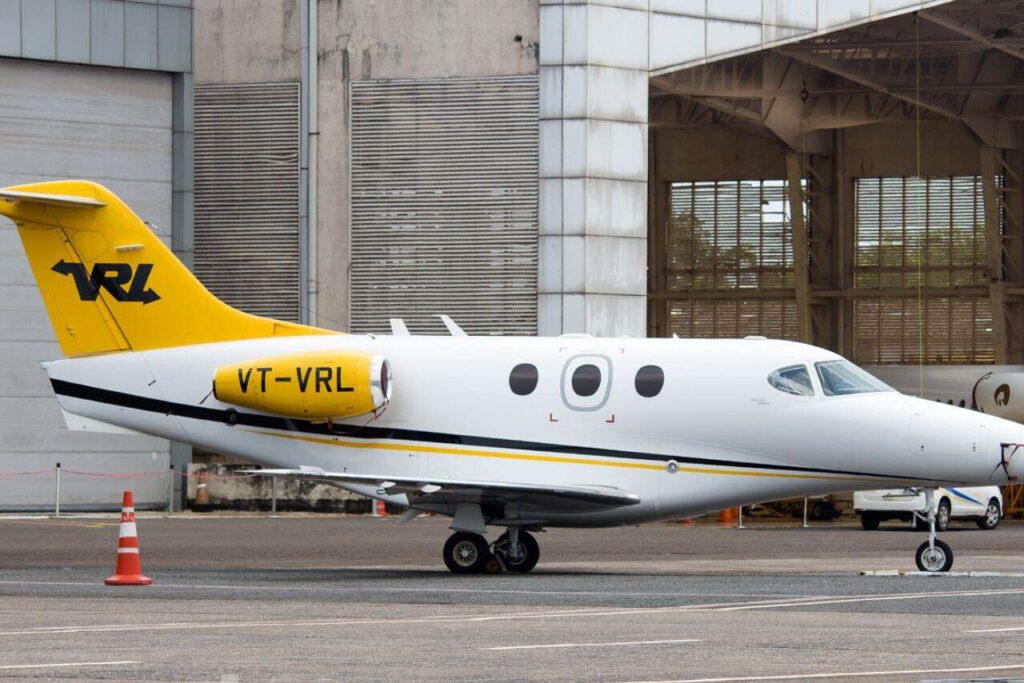
Synopsis: VRL Logistics Limited is focusing on margin-led growth through freight price hikes, fuel cost recovery mechanisms and selective customer rationalisation. Despite rising diesel prices and higher operating costs, the company maintained 20%+ EBITDA margins in FY26, supported by better realisations, route optimisation, improving volumes and expanding network presence across India.
India’s logistics sector is gradually shifting toward organised operators as rising fuel costs, compliance requirements and service expectations reshape the industry. Companies with strong networks, pricing discipline and operational efficiency are expected to benefit from this transition.
In this backdrop, VRL Logistics Limited is focusing on profitable growth through freight rationalisation, selective price hikes, fuel cost recovery and network expansion while maintaining EBITDA margins above 20% despite inflationary pressures and volatile operating conditions. With a market cap of Rs 4,100 crore, the shares of VRL Logistics Ltd are trading at Rs 237 and are trading at a PE of 17.5 compared to their industry’s PE of 25.
Freight Rationalisation Changes The Growth Strategy
VRL Logistics Limited came into FY26 with a significantly different strategy compared to other years. In contrast to aggressive volume growth, the company pursued freight rationalisation, strategic pricing changes, and exiting businesses that were unprofitable. It must be pointed out that management noted that the year began with 13% lower volumes in Q1, but through careful pricing and operations, the year ended with just 7% lower volumes.
It was an initiative targeted not at volumes but profit. In the opinion of management, there were several customers and business lines that generated very little margin and thus became unviable. As a result, the company decided to get out of such business or renegotiate prices. Such a strict policy, which is apparently starting to pay off, resulted in Q4 tonnage growing compared to the previous year.
Management believes that some customers, who left VRL Logistics Limited previously due to high prices, returned back to the company thanks to its strong performance. The company believes this shift toward margin-led growth rather than volume-led expansion is critical for maintaining profitability in a volatile fuel cost environment.
Realisations Become The Key Margin Driver
Improvement in freight realisations was one of the major highlights during FY26. The realization per ton witnessed an approximate increase of 3% year-on-year to stand at Rs 8,147 per ton in Q4 FY26 owing to realization improvement and optimised routes.
Management highlighted that the realization improvement continues to be the key driver of profitability for the company. While the volume had been under pressure during most parts of the year, pricing improvements had offset the impact of inflationary pressures and cost pressures.
Total income in Q4 FY26 was reported to be at Rs 859 crore, representing a year-on-year growth of 6% and sequential growth of 3%, backed by realization improvement, customer addition and loss account recovery. Tonnage during the quarter crossed 11,500 tonnes.
FY26 total income was reported to be Rs 3,245 crore, while the EBITDA margin improved by nearly 190 bps year-on-year to 20.8%. The margin improvement was on the back of a nearly 10% increase in realization and continued cost efficiencies. Clearly, VRL pricing initiatives have started influencing the bottom line positively.
Can VRL Sustain 20%+ EBITDA Margins?
The key question for investors is whether VRL will be able to maintain its EBITDA margins above the 20% level even as diesel prices rise, along with increased costs related to hiring lorries and rising wages.
The EBITDA margin for the fourth quarter of FY26 came in at 21.4%. Nevertheless, this figure represents a decrease of about 190 basis points compared to the fourth quarter of FY25, which was one of the best quarters for the company as far as its margins were concerned, with figures consistently staying above 23%.
According to the company’s management, this decline in margins was largely driven by an increase of 1.73% in lorry hire charges, an increase of 0.74% in the costs related to employees, and an increase of 0.85% in vehicle repair and maintenance costs. On the other hand, the costs of fuel fell as a percentage of total revenue by 1.77%.
Nevertheless, the company’s management expressed its confidence in its ability to maintain EBITDA margins within the range of 20% to 21%. According to management, the reasons behind their confidence include flexibility when it comes to prices and the ability to hike freight selectively while exercising cost discipline.
Fuel Cost Recovery Takes Center Stage
One of the important points discussed during the earnings call was about fuel cost recovery systems. Diesel prices have gone up, but bulk fuel procurement benefits have decreased since the refinery-linked bulk quantities of purchase fell from 41% to 36%.
The management believes that these high prices should eventually be passed on to the consumers. In order to do so, the company did not decide to raise the prices uniformly along all routes and implemented a select approach depending upon the competitive situation and demand conditions.
The company has already raised the freight prices on select routes, apart from taking other pricing initiatives. One such initiative included charging an additional 1 kilogram per cubic foot for selected routes to bring about better realization from the business.
Another step being taken by VRL includes raising loading charges, unloading charges and fuel-on-value charges in selected contracts. More importantly, the management has implemented a fuel surcharge clause in select contractual agreements for bringing the freight prices in tandem with the prices of diesel. The management believes that although there may be some delay in recovering the fuel inflation, the company will eventually succeed in passing on the additional costs.
Network Expansion Supports Volume Recovery
Pricing is expected to continue being the primary contributor to margins, while the network expansion strategy of VRL will enable it to meet the tonnage targets going forward.
VRL opened about 110 branches during FY26, but some branches which weren’t performing well had to be closed; hence, net additions during FY26 came down to roughly 40. For FY27, management expects that there will be around 100 branch additions due to the increased penetration into under-served geographies.
As per management, the new branches have begun contributing towards adding new customers, leading to growth in tonnage. During Q4FY26, the contribution from new branches to tonnage growth was approximately between 1% and 1.5%.
In addition, VRL is aggressively spending on owned infrastructure facilities, which include land and buildings. This enables the company to improve operational efficiency, decrease the delivery time, and ensure a better customer experience. As informed by management, improved infrastructure reduces claims ratio, as well as improves customer retention rates. These moves would help improve competitive position for VRL in the long run.
Strong Cash Flows Support Expansion
The balance sheet and cash generation of VRL were yet another highlight for FY26. Operating cash flow was Rs 668 crore compared to Rs 583 crore last year due to better profitability.
Capex stood around Rs 298 crore for FY26, out of which Rs 101 crore was spent towards the addition of commercial vehicles, while Rs 165 crore was invested in land/building infrastructure at various operating locations.
Going forward, capex will be in the range of Rs 300 crore to Rs 350 crore every year, with major portions dedicated to investments in warehousing and branch infrastructure. Plans have already been made to open new hubs in Nagpur and Raipur.
The balance sheet still looks very healthy, with net debt around Rs 440 crore at March 2026. More importantly, receivable days remain one of the lowest amongst any company at around 10 days. This highlights efficient collections and the broad customer base of over 10 lakh GST-registered customers. The return ratios have also seen a considerable improvement, with ROCE moving up to 25% from 21% and ROE increasing to 21% from 18%.
Industry Dynamics Are Turning Favorable
The company emphasized that the logistics industry is steadily shifting from being run by disorganised companies to becoming more organised. As explained by VRL, an increase in compliance needs, improved services, and costs of fuel are slowly assisting the organised companies in capturing market share.
In addition, VRL feels that its vast network, superior services and route optimisation give it a strong competitive edge. VRL currently operates in 24 states and 4 union territories, with a presence in close to 1,300 branches and 50 transshipment points.
Management further said that competitors are increasingly implementing freight rate increases because of fuel inflation, which helps avoid low pricing in the industry. This will help maintain pricing discipline in the industry due to such moves.
Moreover, it was noted that VRL was consistently charging higher rates than most unorganised firms because of the reliability and good quality of services offered. Pricing of organised firms and corporate contracts, however, remained similar.
The company is experiencing a growing interest in high value-added services such as door-to-door delivery. While door delivery contributed about 33-34% in the past, its contribution is currently close to 40%. Also, realization on these deliveries is Rs 1 to Rs 1.5 per kg more.
Can Pricing Power Offset Fuel Inflation?
Ultimately, the key issue surrounding VRL Logistics is whether pricing power and fuel cost recovery capabilities can continue mitigating the impact of higher inflation. According to management, its pricing capabilities, route optimisation, and customer diversification should be sufficient for keeping EBITDA margins above the 20% mark.
Although some basis points of pressure are possible due to the delay in implementing freight rate increases, management still sees ways to pass a large share of diesel inflation to customers. On top of that, VRL Logistics starts FY27 on the heels of improving volume trends.
Specifically, management anticipates 6-7% growth in tonnage for the entire year. This growth can be attributed to customer acquisitions, branch openings, and the return of previous clients. In essence, the management’s strategy seems to be aimed at ensuring profitability while gradually recovering volumes rather than pursuing risky strategies involving low margins.
Taking into account solid cash flow generation, prudent capital allocation, and rising discipline in price fixing, VRL Logistics sees no risks of falling profits due to fuel inflation and other macroeconomic problems. From the perspective of an investor, the upcoming quarters should indicate how much power VRL Logistics has when it comes to pricing and mitigating fuel costs.
Disclaimer: The views and investment tips expressed by investment experts/broking houses/rating agencies on tradebrains.in are their own, and not that of the website or its management. Investing in equities poses a risk of financial losses. Investors must therefore exercise due caution while investing or trading in stocks. Trade Brains Technologies Private Limited or the author are not liable for any losses caused as a result of the decision based on this article. Please consult your investment advisor before investing.
The post VRL Logistics: Will Price Hikes and Fuel Cost Recovery Help Sustain Margins Above 20%? appeared first on Trade Brains.
Related Articles
Finolex Industries Shares Surge 8% After Q4 Net Profit Increases 125% QoQ; Announces 137.5% Dividend Payout
Synopsis: Finolex Industries Ltd reported a strong performance for Q4 FY26, supp...
Saatvik Green Energy Jumps 3% After Securing Domestic Solar Contract Worth ₹171 Cr; Revenue up 111% YoY
Synopsis: Saatvik Green Energy Limited is capturing strong market interest today...
GPT Infraprojects Under Spotlight After Bagging Mega ₹72 Cr Railway Order for PSC Sleepers
Synopsis: GPT Infraprojects Limited is capturing notable market interest today,...
E To E Transportation Secures Record ₹216 Cr South Central Railway EPC Contract
Synopsis: Receiving a Letter of Acceptance from South Central Railway on 26 May...