What the TFSA Fine Print Says About Holding U.S. Stocks
Alex Smith
1 hour ago
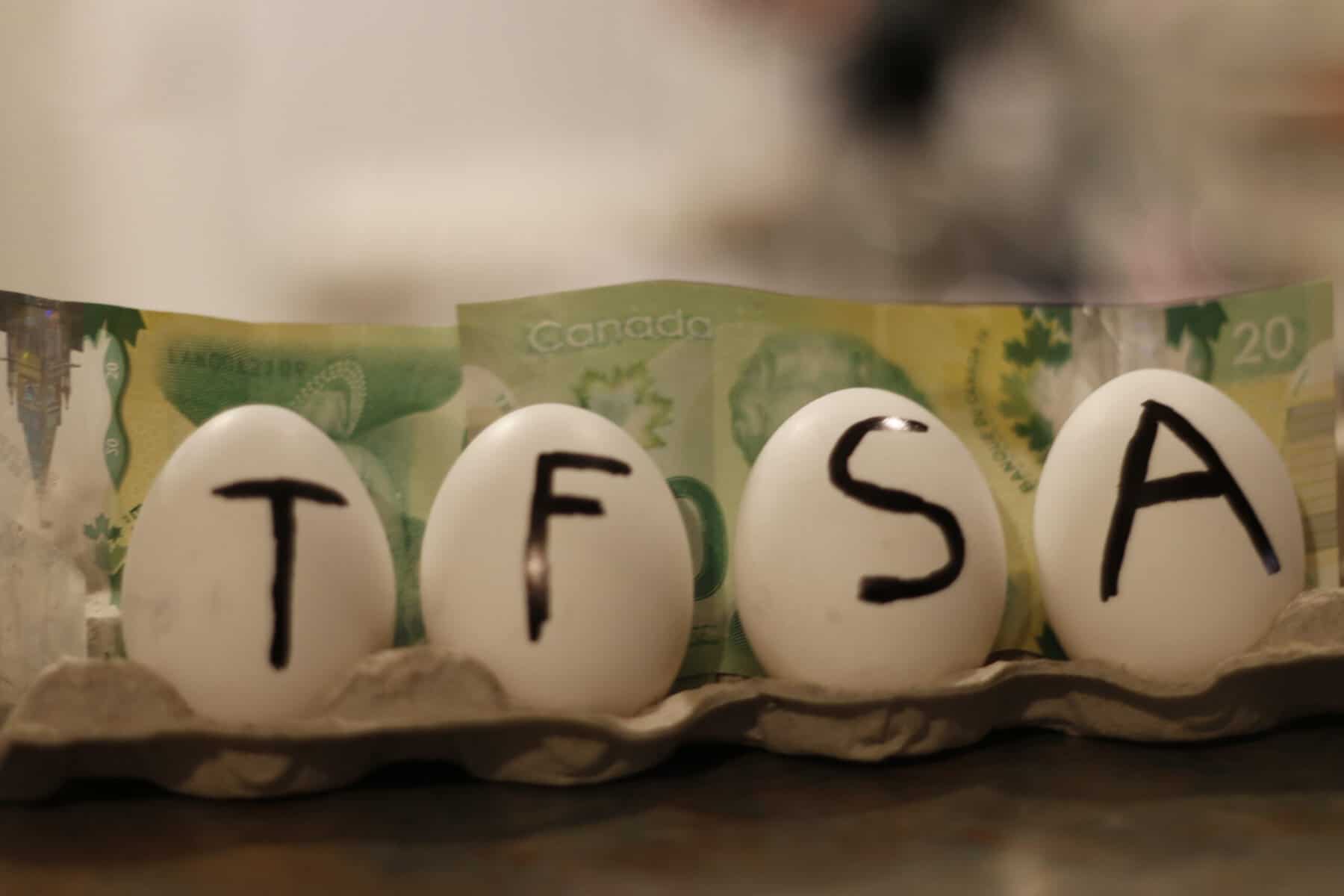
The Tax-Free Savings Account (TFSA) is easily one of the most powerful investing tools Canadians have. The fact that you can contribute thousands of dollars each year and invest that money in Canadian stocks for the long haul without paying any taxes on it is a massive advantage.
Taxes are by far the biggest drag on your portfolio when it comes to compounding. Thatâs why the TFSA is such a powerful tool for Canadians. And you can even buy and hold U.S. stocks inside your TFSA too.
However, while you can buy and hold U.S. stocks in your TFSA, thereâs a bit of fine print that many investors either overlook or donât fully understand, which makes the advantages less optimal than they are with Canadian stocks.
What to know about owning U.S. stocks in your TFSA
So, while any capital gains you earn on U.S. stocks inside your TFSA are still completely tax-free in Canada, the difference comes with dividends.
The United States imposes a 15% withholding tax on dividends paid to Canadian investors. So, although if you hold U.S. stocks in a non-registered account, typically that 15% can often be claimed as a foreign tax credit on your Canadian tax return.
Inside your TFSA, however, you canât recover that withholding tax since the TFSA is considered a tax-free account by Canada but not recognized as a retirement account by the U.S. For example, if a U.S. stock pays a $100 dividend, youâll only receive $85 inside your TFSA after the withholding tax is deducted.
That doesnât make U.S. stocks a bad choice for a TFSA. It just means that dividend investors need to understand that the yield you see quoted is not the exact yield youâll receive after the withholding tax.
This is one of the main reasons some investors prefer to hold U.S. dividend stocks inside a Registered Retirement Savings Plan (RRSP) instead. The RRSP is recognized as a retirement account under the Canada-U.S. tax treaty, which means U.S. dividends paid inside an RRSP are not subject to the 15% withholding tax.
The good news for investors
The good news for investors is that there are a ton of high-quality U.S. stocks that donât pay a dividend or offer yields of less than 1%. High-potential, early-stage growth stocks donât typically offer much of a dividend, if at all.
For example, high-quality growth stocks like Alphabet, Amazon, Nvidia, Apple, and Meta pay no dividend at all or offer yields of less than 0.5%, making these the types of U.S. stocks that make the most sense to own in your TFSA.
If you are a dividend investor, there are a ton of high-quality Canadian dividend stocks to consider, especially ones with operations in the States, or that trade on both exchanges.
For example, Enbridge is one of the best and most popular dividend stocks among Canadian investors, which not only trades in both Canada and the U.S. but also has operations across both countries, offering Canadians exposure to the U.S. economy through a Canadian stock.
So, if youâre looking to build the optimal TFSA portfolio with both high-quality Canadian and U.S. stocks, youâll want to keep the fine print on U.S. dividend stocks in the back of your mind.
The post What the TFSA Fine Print Says About Holding U.S. Stocks appeared first on The Motley Fool Canada.
Should you invest $1,000 in Shopify right now?
Before you buy stock in Shopify, consider this:
The Motley Fool Canada team has identified what they believe are the top 10 TSX stocks for 2026⦠and Shopify wasnât one of them. The 10 stocks that made the cut could potentially produce monster returns in the coming years.
Consider MercadoLibre, which we first recommended on January 8, 2014 … if you invested $1,000 in the âeBay of Latin Americaâ at the time of our recommendation, youâd have $20,155.76!*
Now, it’s worth noting Stock Advisor Canada’s total average return is 90%* – a market-crushing outperformance compared to 81%* for the S&P/TSX Composite Index. Don’t miss out on our top 10 stocks, available when you join our mailing list!
Get the 10 stocks instantly #start_btn6 { background: #0e6d04 none repeat scroll 0 0; color: #fff; font-size: 1.2em; font-family: 'Montserrat', sans-serif; font-weight: 600; height: auto; line-height: 1.2em; margin: 30px 0; max-width: 350px; text-align: center; width: auto; box-shadow: 0 1px 0 rgba(0, 0, 0, 0.5), 0 1px 0 #fff inset, 0 0 2px rgba(0, 0, 0, 0.2); border-radius: 5px; } #start_btn6 a { color: #fff; display: block; padding: 20px; padding-right:1em; padding-left:1em; } #start_btn6 a:hover { background: #FFE300 none repeat scroll 0 0; color: #000; } @media (max-width: 480px) { div#start_btn6 { font-size:1.1em; max-width: 320px;} } margin_bottom_5 { margin-bottom:5px; } margin_top_10 { margin-top:10px; }* Returns as of February 17th, 2026
More reading
- Building Generational Wealth: Why Now is Still the Time to Invest in Canadian Stocks
- Everyone’s Ignoring These Stocks, but I See Tremendous Upside in 2026
- Got $2,500? 2 Energy Stocks to Buy and Hold Forever
- 1 Incredible TSX Dividend Stock to Buy While it’s Down 55%
- Why Investing in Canadian Efficiency Could Pay Off Big
Fool contributor Daniel Da Costa has positions in Enbridge. The Motley Fool recommends Alphabet, Amazon, Apple, Enbridge, Meta Platforms, and Nvidia. The Motley Fool has a disclosure policy.
Related Articles

Invest $7,000 in This Dividend Stock for $279 in Annual Passive Income
Discover the ideal dividend stock to invest in with your $7,000 TFSA contributio...

Got Patience? 3 Turnaround Growth Stocks for Steady Investors
Are you ready for not one, not two, but three turnaround stories to consider as...

Building Generational Wealth: Why Now is Still the Time to Invest in Canadian Stocks
TFI International could be a “boring but powerful” Canadian wealth builder, usin...

Got $2,500? 2 Energy Stocks to Buy and Hold Forever
Look how a $2,500 investment in one TSX energy stock 25 years ago could have gro...