What would happen if the dollar reaches ₹100; Who would be the winners and losers?
Alex Smith
2 hours ago
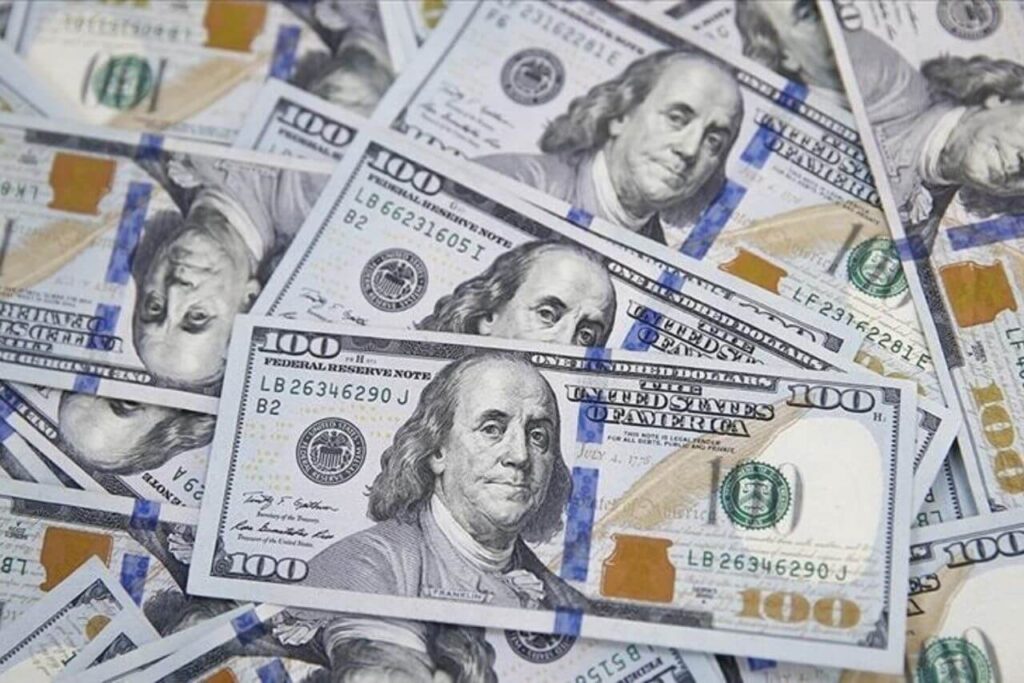
Synopsis: As the dollar approaches Rs 100, its impact goes far beyond forex markets. Export-driven sectors like IT and pharma gain, while import-heavy industries face margin pressure. This shift quietly redistributes earnings across sectors, making portfolio allocation critical in navigating both risks and opportunities.
A dollar nearing Rs 100 isn’t just another market milestone; it’s a moment that quietly changes how money moves through the economy. It shows up in places most people don’t immediately connect: higher fuel bills, rising costs for companies, and shifting earnings across sectors. But for investors, this isn’t just macro noise; it’s a signal. Because when the rupee weakens, it doesn’t impact every business equally. It redraws the map of winners and losers in your portfolio.
Why the Dollar-Rupee Rate at 100 Is More Than Just a Number
Round numbers have a way of making people nervous. And 100 is one of those levels that traders, fund managers, and even RBI officials keep an eye on, not because someone declared it important, but because markets collectively decided it is. And in finance, that’s enough.
Here’s the thing about big psychological levels: they don’t wait for the rate to actually get there to start causing trouble. The moment 100 starts feeling possible, behaviour changes. Importers rush to lock in dollar rates early. Fund managers quietly shift their positions. The RBI starts paying closer attention. Nobody wants to be caught off guard, and that nervousness alone is enough to move markets.
And history has shown us this plays out every single time. When the rupee crossed 70, then 80, then inched toward 85 and 95, each level brought real consequences. FIIs sold. Import bills increased. The RBI intervened. Inflation went up. So if and when we hit 100, it won’t just be a number on a screen. It’ll be a signal, one that tells the world something has shifted.
How a Strong Dollar Quietly Weakens the Rupee
When the dollar strengthens globally, everyone rushes toward it: investors, fund managers, and importers. To buy dollars, they sell rupees. More rupees in the market with fewer takers, and the rupee loses value.
India’s import dependence makes it worse. We buy enormous amounts of crude oil, electronics, gold, and machinery, almost all priced in dollars. Every single day, Indian importers are selling rupees to buy dollars to pay for these imports. When the dollar is already strong, that bill gets even bigger. It’s like finding that everything at the market costs more, except it’s happening on a national scale every single day.
And then foreign money adds another blow. FIIs, the large global funds invested in Indian stocks and bonds, start pulling out when the U.S. market offers better returns. They sell Indian assets, convert rupees to dollars, and leave. That hits twice simultaneously — the stock market falls and the rupee weakens further. It’s exactly why every time the dollar surges, Dalal Street gets nervous and your portfolio feels the pinch.
Rupee depreciation makes India’s GDP look smaller in US dollar terms, which is what global rankings use. When the rupee weakens sharply, even a growing economy can drop behind others with stronger currencies.That’s how India’s rank slipped from 4th to 6th, mainly due to currency impact, not actual economic decline.
India’s Crude Oil Dependence: Why a Weaker Rupee Hurts More Than You Think
According to data from the Ministry of Petroleum and Natural Gas, India’s oil imports accounted for 90.8% of the total oil processed by Indian refineries in February 2026, up from an already historically high 90.2% in the first half of 2025-26. Every single one of those barrels is priced in dollars, which means every time the rupee weakens, the cost of running the country goes up automatically.
Wednesday’s session showed exactly how this plays out. The rupee climbed to 93.13 during the day, oil prices were falling, and markets were optimistic. It closed at 93.3725, barely moving from its previous close of 93.3750. A good day globally, and the rupee still couldn’t catch a break. That’s what structural oil dependence does to a currency.
And the pain doesn’t stay in the currency market. A weaker rupee makes every barrel costlier in rupee terms even when global prices haven’t moved. That cost travels into fuel prices, into transportation and more. The Middle East conflict has made it worse, squeezing India from both sides at once. Even March’s surprisingly better trade deficit of $20.67 billion against an expected $32.75 billion came with a warning: the pressure hasn’t gone away; it’s just pausing.
Sectors and Businesses That Take the Hardest Hit
When the rupee weakens, oil marketing companies like Indian Oil Corporation, BPCL and HPCL tend to feel the pressure almost immediately. Since they import crude oil in dollars, every dip in the rupee makes their core raw material more expensive. The tricky part is that they can’t always pass on these higher costs right away due to either pricing controls or competitive pressures. So they end up absorbing the hit, which quietly eats into margins and makes earnings more volatile.
Airlines face a similar squeeze, and for players like IndiGo, it can get uncomfortable quickly. Fuel is one of their biggest expenses, and it’s directly linked to global oil prices and the dollar. When the rupee weakens, fuel costs shoot up, but raising ticket prices isn’t that simple, especially in a price-sensitive market where higher fares can hurt demand. So airlines often find themselves stuck, with costs rising faster than revenues, putting pressure on profitability.
Then there are everyday consumption businesses like Hindustan Unilever and Asian Paints, which also feel the impact, though in a more subtle way. These companies depend on imported inputs like palm oil and crude-based derivatives. When the rupee weakens, their input costs go up. They’re left with two choices—raise prices and risk slowing demand, or absorb the costs and see margins shrink. In a market like India, where consumers are highly price-conscious, neither option is easy, which makes this a slow but steady pressure on earnings.
Who Actually Benefits When the Rupee Falls
When the rupee weakens, IT companies like Infosys and TCS are usually the first clear winners. Think of it this way that most of their clients are based in the US and pay in dollars, but a large part of their expenses, especially salaries, are in rupees.
So when the dollar strengthens, every dollar they earn converts into more rupees, while their costs don’t rise at the same pace. This naturally expands margins without them having to do anything differently operationally. That’s why during periods of rupee depreciation, IT stocks often see earnings upgrades and tend to outperform.
Pharma companies such as Sun Pharma and Dr Reddy’s Laboratories also benefit, but the story is a bit more nuanced. On one hand, they generate a significant share of their revenues from global markets, especially the US, so a weaker rupee boosts their reported earnings.
On the other hand, many pharma firms import key raw materials and intermediates, which become more expensive when the rupee falls. So while revenues go up, costs rise too. The net impact is still positive, but it depends on how well the company manages pricing, cost control, and product mix.
Mixed impacts which depends on crucial decisions
Where things get more interesting is in specialty chemicals and export-driven manufacturing, with companies like Aarti Industries. This is not a straightforward win. Some players benefit because exports become more competitive globally, while others struggle if their raw materials are dollar-linked. So the advantage depends on one key factor: can the company pass on higher costs without losing demand? If yes, margins expand. If not, the benefit disappears quickly.
Textiles and apparel exporters such as Arvind Ltd or Page Industries also stand to gain, but only if global demand supports them. A weaker rupee makes Indian garments cheaper for international buyers, which should ideally boost orders. But this is a cyclical industry. If global demand is weak, currency alone cannot revive growth. So here, currency acts as a tailwind—but not the engine.
Even sectors you wouldn’t immediately think of, like auto and auto ancillaries, e.g., Tata Motors, see a mixed impact. Export-oriented players benefit, especially those selling vehicles or components overseas. But many companies also rely on imported parts and commodities. So again, it comes down to execution. Can they raise prices fast enough to offset higher costs?
How is your portfolio affected?
When the rupee weakens, your portfolio doesn’t change overnight, but it starts behaving differently in subtle ways. Stocks with global exposure quietly begin pulling ahead, as their earnings get a boost from the currency movement. Without any major news or visible trigger, you may notice certain stocks consistently outperforming. That’s the currency effect playing out in the background, slowly reshaping returns.
At the same time, some parts of your portfolio may start losing momentum. Companies dependent on imports or domestic demand begin facing higher costs, which either eat into margins or force price hikes. Neither is ideal. Over time, this creates a divergence , some stocks keep delivering, while others struggle to keep pace. That’s when you realise it’s not just about what you own, but how your portfolio is positioned when macro shifts like currency movements begin to take hold.
Conclusion
As the dollar approaches the Rs 100 level, what appears to be a currency phenomenon turns out to be an earnings phenomenon for investors. A weaker rupee redistributes gains and losses across various sectors.
While export-orientated sectors such as information technology and pharmaceuticals gain, industries linked to oil imports, airlines, and consumer goods face headwinds from increased input costs. What starts off as a macroeconomic development translates to higher fuel prices, higher costs of inputs, reduced profit margins, and revised earnings estimates.
In summary, this currency development has created winners and losers across various sectors based on whether a company has benefited from foreign revenue inflows or incurred costs in foreign currencies. Investors need to pay attention to how currency movements could affect the performance of their investment portfolios.
Not all securities and investment portfolios will be equally impacted by currency fluctuations; indeed, a change in the value of a currency affects the returns generated by different asset allocations. As the value of the dollar approaches Rs 100, portfolios invested in global earners prove to be more resilient than others.
Disclaimer: The views and investment tips expressed by investment experts/broking houses/rating agencies on tradebrains.in are their own, and not that of the website or its management. Investing in equities poses a risk of financial losses. Investors must therefore exercise due caution while investing or trading in stocks. Trade Brains Technologies Private Limited or the author are not liable for any losses caused as a result of the decision based on this article. Please consult your investment advisor before investing.
The post What would happen if the dollar reaches ₹100; Who would be the winners and losers? appeared first on Trade Brains.
Related Articles

Should You Hold These 5 Cement Stocks Amid a 16% Rise in Costs?
SYNOPSIS: Rising energy costs are pressuring cement sector margins, leading to E...

Citius TransNet Investment Trust InvIT IPO: Check Price Band, Financials and More
Synopsis: Citius Transnet Investment Trust plans a Rs. 1,105 crore IPO to fund r...

Axis Group Portfolio: Investments in New Stocks and Stake Changes in Q4
Synopsis: Axis Group’s portfolio reflected a strategic reshuffle with new additi...

4 Stocks in Which Promoters Reduced Their Pledge by Up to 65% in Q4 FY26
SYNOPSIS: Promoter pledge reductions across select stocks in March 2026 signal i...