BlackRock And Mastercard Turn To XRP Ledger In DeFi Power Play
Alex Smith
1 month ago
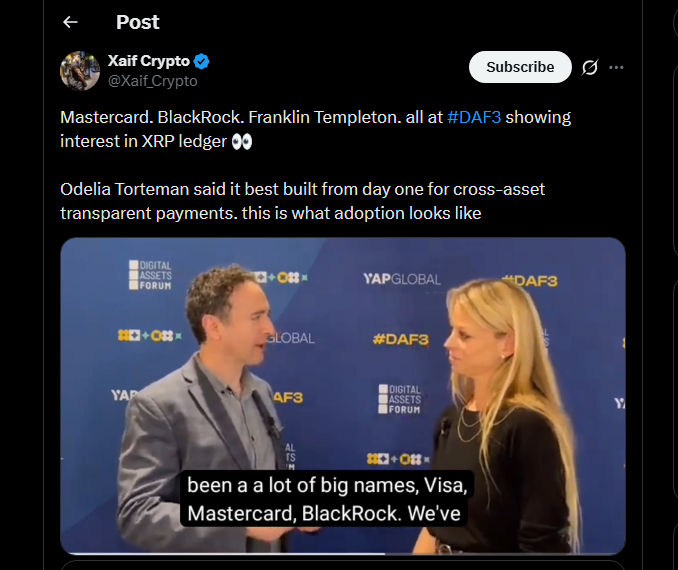
A partnership between BlackRock, Mastercard, Gemini, and Ripple recently completed tests using a regulated stablecoin to settle card payments on the XRP Ledger. This move shows how traditional financial giants are shifting from watching blockchain technology to actually putting it to work.
The trial focused on RLUSD, a stablecoin designed to help banks process payments with more transparency and speed than current systems allow.
Major Institutions Explore Blockchain Infrastructure
Ripple executive Odelia Torteman shared details about these developments during a recent industry forum in London. While many people view XRP as a token for trading, firms like BlackRock and Franklin Templeton are looking at the underlying ledger as a tool for institutional finance.
The network was built to handle cross-border transactions and move multiple types of assets at once. It includes a built-in decentralized exchange and an automated market maker. These features allow large companies to trade and move value without being fully reliant on traditional middlemen.
Last September, Franklin Templeton joined forces with Ripple and DBS Bank to introduce new ways to lend and trade. They used money market funds that were turned into digital tokens to increase liquidity.
By combining these tokens with regulated stablecoins, the firms aim to make capital move more efficiently while staying within legal rules. This approach helps build trust for large investors who are often wary of the volatile nature of the broader crypto market.
BlackRock And Ripple Link Investment Funds
Reports indicate that the reach of this technology is expanding into the world of Treasury products. Ripple worked with Securitize to create a system where investors in BlackRock’s BUIDL fund can turn their holdings into RLUSD.
This setup allows for liquidity 24 hours a day through the use of smart contracts. Normally, pulling money out of these types of funds can take time and only happens during banking hours. This new method changes that by allowing constant access to funds.
Future Growth For Bridge AssetsData shows that the XRP Ledger is being positioned as a primary choice for firms that need to meet strict identity and compliance standards. It uses “trust lines” and specific tools to handle know-your-customer requirements.
It is evident that the actual application of XRP is changing as more institutions start participating in its operations. The coin has traditionally been used for speculative purposes by individual traders through exchanges; however, it is currently being applied as a technical medium of liquidity.
As a digital asset, XRP acts as a mediator for banks and facilitates transactions in various forms of value worldwide in a matter of seconds.
Featured image from The Wall Street Experience, chart from TradingView
Related Articles

Zcash Fixes Critical Orchard Vulnerability As ZEC Holds $600 Support
Zcash has patched a dangerous vulnerability in its privacy-focused infrastructur...

Bitcoin Falls Below $66K As Short-Term Holder Stress Reaches February Levels
Bitcoin has lost the $66,000 level as selling pressure and uncertainty intensify...

XRP Already Powers Real Banking Activity, Says Evernorth, With More Growth Expected
Evernorth says daily activity on the XRP Ledger has climbed to nearly 3 million...
Crypto Is A ‘Failed’ Asset Class, Says Renowned Economist
Economist and macro trader Alex Krüger has argued that “crypto” has largely fail...