5 Companies Driving India’s Underground Infrastructure Expansion
Alex Smith
3 hours ago
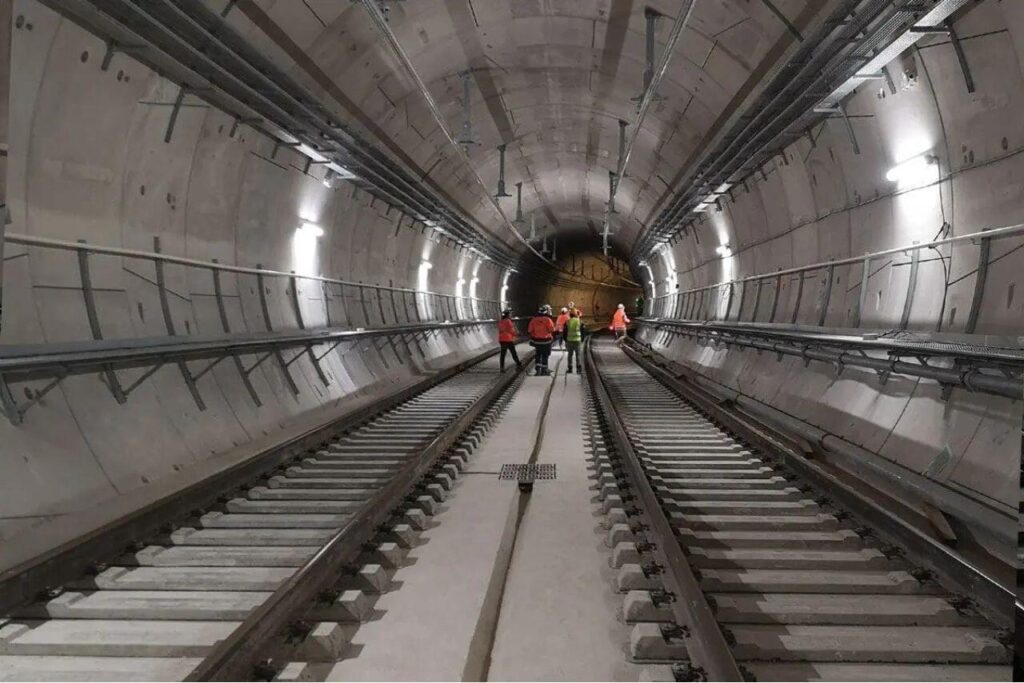
Synopsis: India’s cities are sprawling outwards and downwards. From below, a new wave of underground infrastructure is transforming urban India, with metro tunnels, sewage networks, water pipelines and utility systems. From TBM breakthroughs under rivers to large diameter pipes running through city underbellies, a handful of specialist contractors and manufacturers are quietly laying the foundation that modern Indian cities cannot do without.
India’s urban infrastructure is increasingly expanding beneath the surface as metros, water pipelines, sewerage networks, and utility corridors become essential to supporting rapid urbanisation. This transformation is creating opportunities across tunnelling, underground construction, water engineering, and pipeline manufacturing. Here are five companies playing a significant role in building the infrastructure that powers India’s cities from below.
Afcons Infrastructure
Afcons Infrastructure is a prominent player in India’s underground construction sector. Being part of the Shapoorji Pallonji Group, the company has built a strong reputation by taking on challenging projects, such as deep metro stations, hydro tunnels in mountainous areas, shafts, and large-scale TBM operations.
The company has participated in some of India’s most difficult metro projects, including underground sections in cities like Mumbai, Chennai, and Kolkata. TBM tunnelling, the boring of earth or rock with large mechanised shields, is a specialist skill, and Afcons is among the more experienced contractors in the country at it.
Beyond metros, Afcons has worked on hydro tunnels that channel water through difficult terrain for power projects, making it one of the few Indian companies with genuine depth across multiple underground domains.
CemIndia Projects (ITD Cementation India )
CemIndia Projects is another contractor with serious underground credentials. Transitioning from its legacy under the Thai conglomerate Italian-Thai Development to a newly minted, Adani-backed structure following a major acquisition, the company retains nine decades of specialised tunnelling muscle on Indian soil. It has deployed these capabilities seamlessly across deep metro underground stations, deep foundation work, shafts, and marine engineering.
The company has been a crucial part of complex metro construction in cities like Kolkata and Mumbai, often handling the high-precision station blocks and tunnel drives that require absolute structural care. Its marine underground work-building below or near dynamic water bodies adds a heavy engineering dimension that very few domestic competitors can replicate.
For massive urban infrastructure assignments where the engineering complexity rises rapidly, CemIndia Projects is a staple on the tier-1 bidder list, commanding immense respect among project managers and structural engineers alike.
Larsen & Toubro
L&T is an essential player in Indian infrastructure, particularly in underground projects. Its construction division has developed metro tunnels, underground stations, deep foundations, and marine structures nationwide, showcasing both the size of a major corporation and strong technical expertise.
What L&T brings that smaller players often can’t is the ability to handle multiple large projects simultaneously, backed by strong equipment resources and a deep bench of technical talent. It has been involved in metro underground sections across Delhi, Hyderabad, Bengaluru, and other cities.
L&T also has exposure to marine underground engineering – a niche that requires handling complex hydrostatic pressure conditions, which puts it in a different league from most domestic competitors. When a government agency is awarding a high-value, technically complex underground contract, L&T is almost always in the conversation.
VA Tech Wabag
VA Tech Wabag, unlike the first three companies that focus on construction, has a crucial role in building the underground utility infrastructure essential for city operations. This includes systems for sewerage, water transmission pipelines, pumping stations, and utility networks hidden beneath city streets.
Wabag is a global water and wastewater treatment specialist and has been active in India on projects relating to urban water supply and sanitation. In fact, as Indian cities have ageing pipelines, increasing water stress and growing populations, the importance of the kind of underground utility work Wabag does is increasing over time, not decreasing.
Unlike the civil contractors, Wabag’s value is in the process engineering – designing systems that work efficiently over decades, not just in laying pipe. For municipal authorities and urban local bodies upgrading their water and sewerage networks, it’s a name that appears repeatedly in project documentation.
Welspun Corp
Welspun Corp is positioned at the upstream end of the underground infrastructure chain, manufacturing the large-diameter pipes that go into the ground first. Pipes are fundamental for water supply, sewage networks, oil pipelines and gas distribution, and Welspun is India’s leading manufacturer of high-grade steel pipes for these applications.
The company supplies government utilities, oil and gas majors and infrastructure contractors throughout the country. Demand for the kind of pipes Welspun makes remains robust as India expands city gas distribution networks and upgrades water infrastructure under schemes such as the Jal Jeevan Mission.
It’s a different business model – manufacturing rather than construction – but no underground network gets built without the pipes. And when the pipes are large-diameter and high-specification, Welspun is often where they come from.
The Bigger Picture
India’s underground infrastructure ambition is no longer a mere planning document – it is being drilled, bored and piped into reality, city by city. The five companies above are different but complementary parts of that effort: the tunnelers, the metro builders, the water engineers and the pipe suppliers. Their order books will only get bigger with urban India going deeper. The question is not whether the expansion will continue, but how fast India can create the workforce and machinery to match the ambition.
Disclaimer: The views and investment tips expressed by investment experts/broking houses/rating agencies on tradebrains.in are their own, and not that of the website or its management. Investing in equities poses a risk of financial losses. Investors must therefore exercise due caution while investing or trading in stocks. Trade Brains Technologies Private Limited or the author are not liable for any losses caused as a result of the decision based on this article. Please consult your investment advisor before investing.
The post 5 Companies Driving India’s Underground Infrastructure Expansion appeared first on Trade Brains.
Related Articles
Top 10 Stocks to Buy Today to Receive Dividends of Up to ₹110
Synopsis: Several prominent companies, including Swaraj Engines, Tech Mahindra,...
Tata Technologies Surges 7% After Securing $100 Million Global Engineering Deal from Tenneco
Synopsis: Tata Technologies Limited strengthened its global automotive expansion...

HEC Infra Projects Surges 7% After Securing ₹48 Cr Switchyard Contract from BPCL
Synopsis: A fresh Rs. 48 crore work order from Bharat Petroleum Corporation has...
J&K Bank Shares Surge 4% as Q1 Advances Leap 25% to ₹1.30 Lakh Cr Amid Turnaround Momentum
Synopsis: Jammu & Kashmir Bank Limited reported strong Q1FY27 business growt...